Campgrounds & Campsites
Best Camping Area Near Me: Find and Compare
Searching for the "best camping area near me" usually means you want somewhere good, close, and available this weekend.
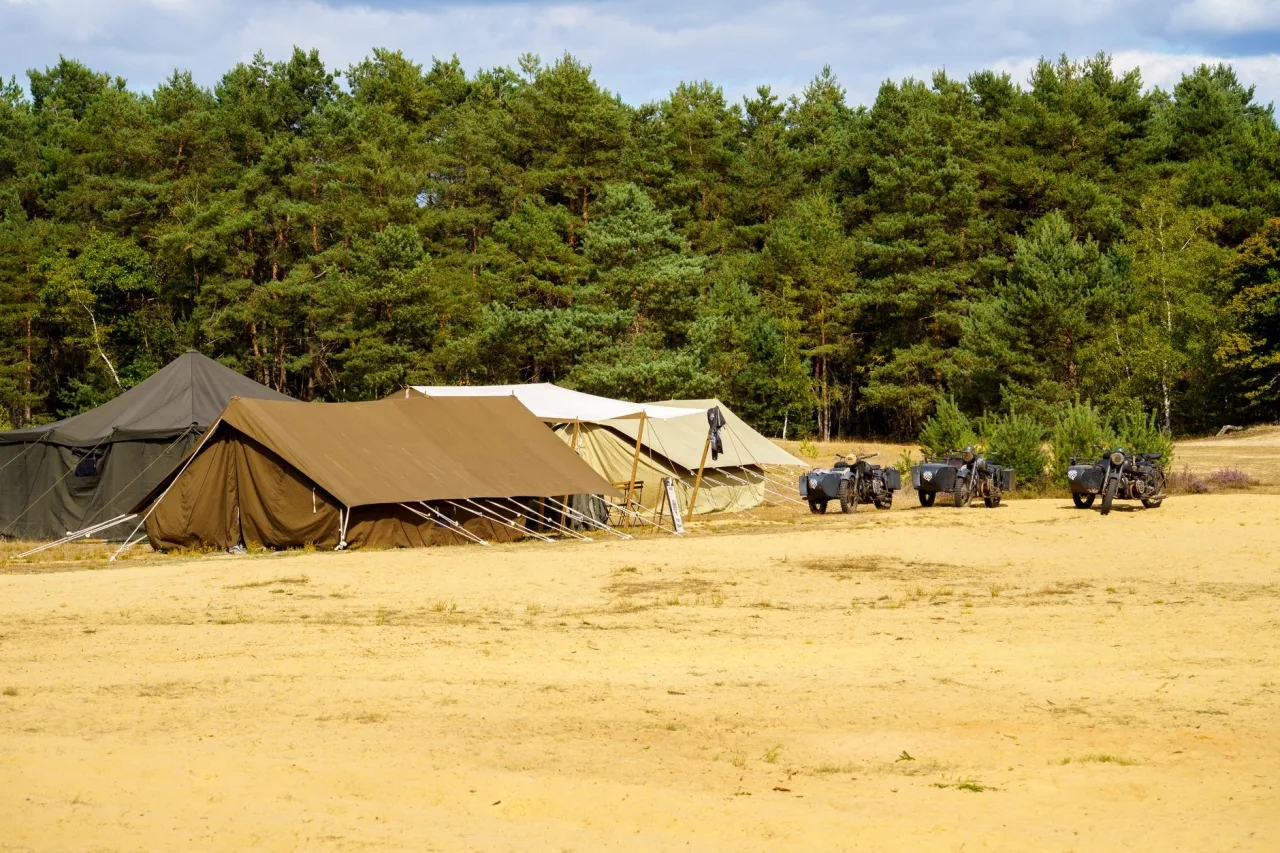
Searching for the "best camping area near me" usually means you want somewhere good, close, and available this weekend. There is no single best spot for everyone, so the smart move is a repeatable method for finding, comparing, and vetting campsites near you. This guide gives you that method, plus a checklist and realistic prices so you can book with confidence.
The short version
- Start with a map search radius you can actually drive, then filter by the amenities you truly need.
- Judge a site on access, water, shade, noise, and reviews, not on the prettiest photo.
- Typical nightly fees range widely by season and site type, so always confirm at the point of booking.
- Book early for holiday weekends, and keep a first-come or dispersed option as a backup.
What "best" really means for a campsite near you
The best camping area is the one that matches your trip, not the one with the highest star average online. A family with two toddlers wants flat ground, flush toilets, and a short walk to the car. A solo backpacker wants quiet, a view, and a trailhead. A big rig owner wants a level pad and hookups. Before you compare anything, write down your top three non-negotiables. That single step filters out most of the noise and turns a vague search into a short, useful shortlist.
It also helps to separate wants from needs. A lake view is a want. A working toilet within reach of your tent at 2am is a need. When you rank your criteria honestly, the "best" option often turns out to be a modest, well-run site twenty minutes away rather than a famous spot two hours out that is fully booked anyway.
How to search for campsites near you
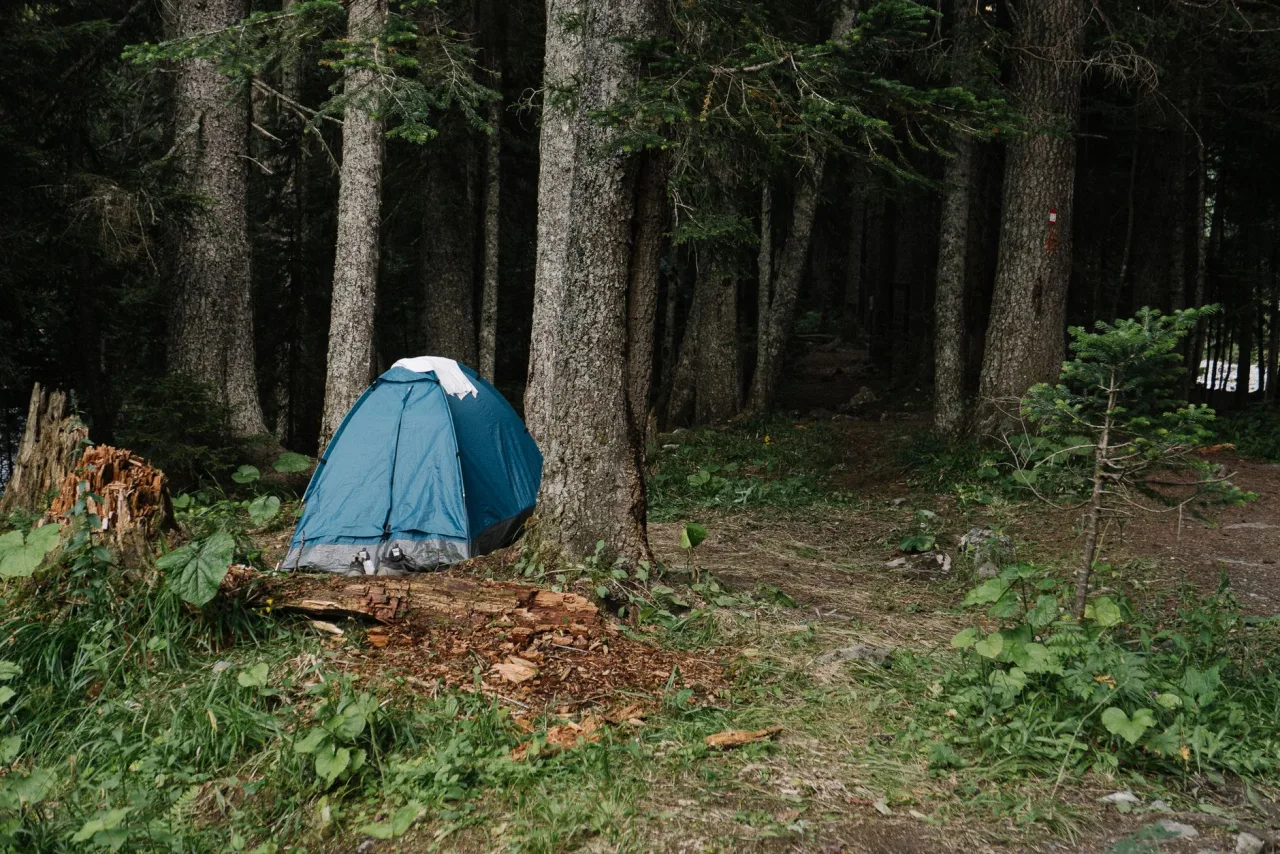
Cast a wide first net, then narrow. Begin with a map and a driving radius that feels sane for your energy and your vehicle. A good near-me search draws on a few overlapping sources so you do not miss anything:
- Federal and state booking portals for public land, which cover a huge share of established campgrounds.
- Private park directories and booking platforms for commercial sites and RV parks.
- Local park and forest authority pages, which often list smaller or seasonal sites that never make the big apps.
- Recent map reviews, which surface real conditions like closures, road works, or a noisy neighbouring field.
For public land in the United States, the official federal booking system at Recreation.gov lets you reserve camping across thousands of facilities and search by location, dates, and amenities. That is a reliable starting point before you branch out to private options. If you want a wider walkthrough of the general search process, our camping near me guide covers it step by step.
The amenities checklist that actually matters
Listings love to advertise features you will never use. Focus on the handful that shape a trip. Work down this list and mark each as need, nice, or skip:
- Toilets and showers: flush versus vault, and whether showers are free, coin, or nonexistent.
- Water: potable water on tap, or must you carry your own.
- Power: electric hookups for RVs or CPAP machines, and the amperage.
- Fire: whether fires or stoves are allowed, and any current burn bans.
- Shade and surface: grass, gravel, sand, or hardstanding, and how level the pitch is.
- Connectivity: phone signal or wifi, if you need to stay reachable.
- Rules: quiet hours, pet policy, generator hours, and maximum vehicle length.
Tip: read the one-star and three-star reviews first
Five-star reviews tell you a place is nice. The one and three-star reviews tell you what goes wrong: thin walls between pitches, a gate locked at night, standing water after rain, or a manager who is hard to reach. Patterns across several reviews matter far more than any single rant or rave.
Reading a listing without getting fooled
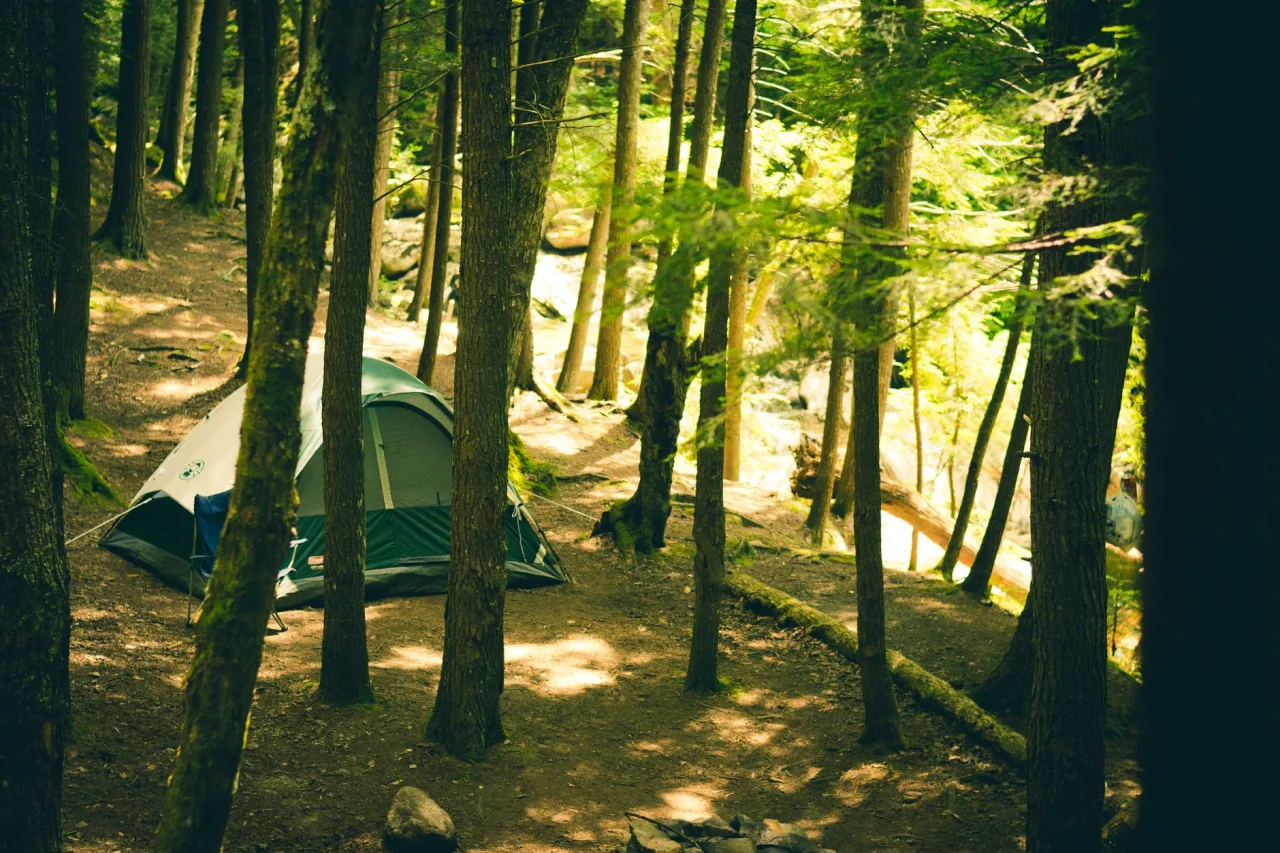
Photos are chosen to sell. Assume the picture shows the site on its best day, in its best corner, from its best angle. To see past the marketing, cross-check the listing against a satellite map. Look at how close pitches sit to each other, whether a highway or rail line runs behind the trees, and how far the toilet block is from the far pitches. Check the booking calendar too: a site that is wide open on a sunny holiday weekend may be telling you something the reviews will confirm.
Pay attention to how the operator writes. Clear, specific descriptions with current dates, honest notes about what is closed, and quick replies to reviews usually signal a well-run place. Vague copy, no recent activity, and defensive replies are yellow flags.
What camping near you typically costs
Prices vary a lot by region, season, and site type, so treat any figure as a ballpark and confirm the real number when you book. As a rough guide in 2026, a basic tent pitch on public land often sits at the low end, a serviced pitch or private site in the middle, and a full-hookup RV spot or a peak-season holiday weekend at the top. Extra charges are common and easy to miss: per-person fees, extra-vehicle fees, pet fees, and a booking or reservation service charge.
To keep costs down without gambling on quality, travel midweek or in shoulder season, look one town over from the marquee destination, and consider simpler public sites where you trade amenities for a lower fee and more space. If you camp often, an annual pass to a park system or a membership can pay for itself, but only do the math against how you actually travel.
Warning: watch cancellation and no-show rules
Popular sites often charge a nonrefundable reservation fee, enforce a cutoff for free cancellation, and may release your pitch if you arrive after a stated time without calling. Read these terms before you pay, especially for holiday weekends when a missed window can cost the full stay.
Booking, arriving, and having a backup
Once your shortlist is down to two or three, book the one that best fits your non-negotiables and lock in dates early for anything near a holiday. Save the confirmation offline, note the check-in window and any gate code, and screenshot the driving directions, because signal often dies on the last few miles. Arrive with enough daylight to find and set up your pitch, which is far less stressful than pitching a tent by headlamp.
Always keep a plan B. If your first choice is full, a nearby first-come-first-served campground or a legal dispersed camping area can save the weekend. For the wider picture of site types, seasons, and etiquette, our complete camping area guide is a useful companion, and if you are weighing bigger public options, see our overview of national campgrounds.
Camp responsibly wherever you land
Good campers leave a site better than they found it. The widely used framework here is Leave No Trace, and the National Park Service publishes the seven Leave No Trace principles, which cover planning ahead, camping on durable surfaces, packing out waste, minimizing campfire impact, and respecting wildlife and other visitors. Following them keeps sites open, clean, and welcoming for the next person searching for the best camping area near them.
Frequently asked questions
How do I find the best camping area near me for this weekend?
Set a realistic driving radius on a map, search the main public booking portal and one or two private directories, then filter by your top three needs such as toilets, hookups, or a pet policy. Check recent reviews and the booking calendar, shortlist two or three sites, and book the one that best fits your must-haves.
How much does a campsite near me usually cost?
Nightly fees range widely by region, season, and site type, from a low basic tent pitch on public land to a higher full-hookup RV spot or a peak holiday rate. Extra fees for people, vehicles, and pets are common. Always confirm the exact price at the point of booking, since rates change with season and demand.
Do I need to book ahead or can I just turn up?
For holiday weekends and popular spots, book well ahead, because they fill fast. Many public campgrounds keep some first-come-first-served pitches, but you cannot count on them in peak season. Keeping a backup site or a legal dispersed option in mind is the safest approach.
How do I know if a campsite is actually good?
Judge it on access, water, shade, noise, and consistent reviews rather than a single glossy photo. Read the one and three-star reviews for recurring problems, cross-check the location on a satellite map, and note how clearly and recently the operator communicates.
What is the cheapest way to camp near me?
Travel midweek or in shoulder season, choose simpler public sites over full-service private parks, and look one town away from the headline destination. If you camp often, an annual park pass or membership can lower your per-night cost, but check it against how you really travel first.
More guides on Campgrounds & Campsites
Have a question or a topic to suggest?
We read every message. Tell us what you would like to see next on the blog.
Get in touchYou may also like
National Campgrounds: Find and Compare
"National campgrounds" usually means camping on public land run by a federal agency: national parks, national forests, and land managed by other federal bodies.
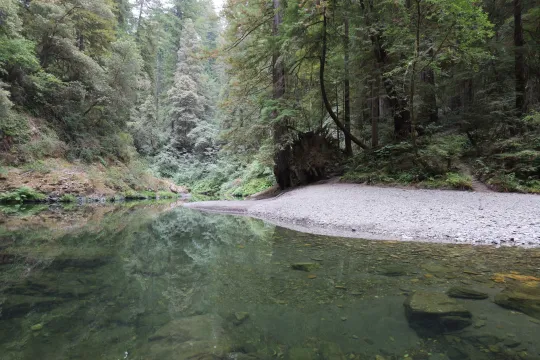
Riverbend Campground: Find and Compare
"Riverbend" is one of the most common campground names in the world, so a search for it usually turns up several different places rather than one.
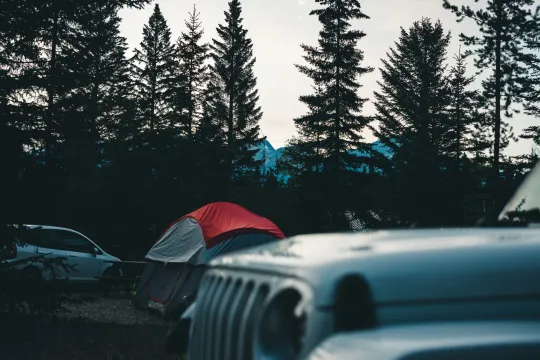
National Park Campgrounds: Find and Compare
Camping inside a national park puts you at the trailhead when the crowds are still asleep and under some of the darkest skies you will ever see.