Campgrounds & Campsites
Dispersed Camping Near Me: Find and Compare
"Dispersed camping near me" is a search for free, primitive camping outside official campgrounds, usually on public land.

"Dispersed camping near me" is a search for free, primitive camping outside official campgrounds, usually on public land. This guide explains what dispersed camping really is, how to find legal spots near you, and how to do it responsibly. It is an honest how-to, not a directory of secret coordinates, because the right spot depends entirely on where you are and what the local land manager allows.
The short version
- Dispersed camping means camping outside developed campgrounds, typically on national forest or Bureau of Land Management land, with no facilities.
- It is usually free, but you must camp only where it is permitted and follow local rules on distance from water, roads, and stay limits.
- There are no toilets, water, or trash service, so you must be fully self-sufficient and pack out everything you bring.
- Always confirm the current rules with the specific land manager before you go, because regulations vary by area and change seasonally.
What dispersed camping actually means
Dispersed camping, also called wild camping or boondocking in the United States, is camping outside a designated campground. It generally happens on public land such as national forests and Bureau of Land Management areas. Unlike a developed site, a dispersed spot has no connection to services: no water, no sewage, no electricity, and no Wi-Fi. That primitive quality is the appeal for some and the deal-breaker for others.
Because there is no host or reservation, the responsibility falls entirely on you to camp legally, safely, and cleanly. The reference overview of dispersed camping is a good primer on the concept and its typical rules.
How to find legal dispersed spots near you
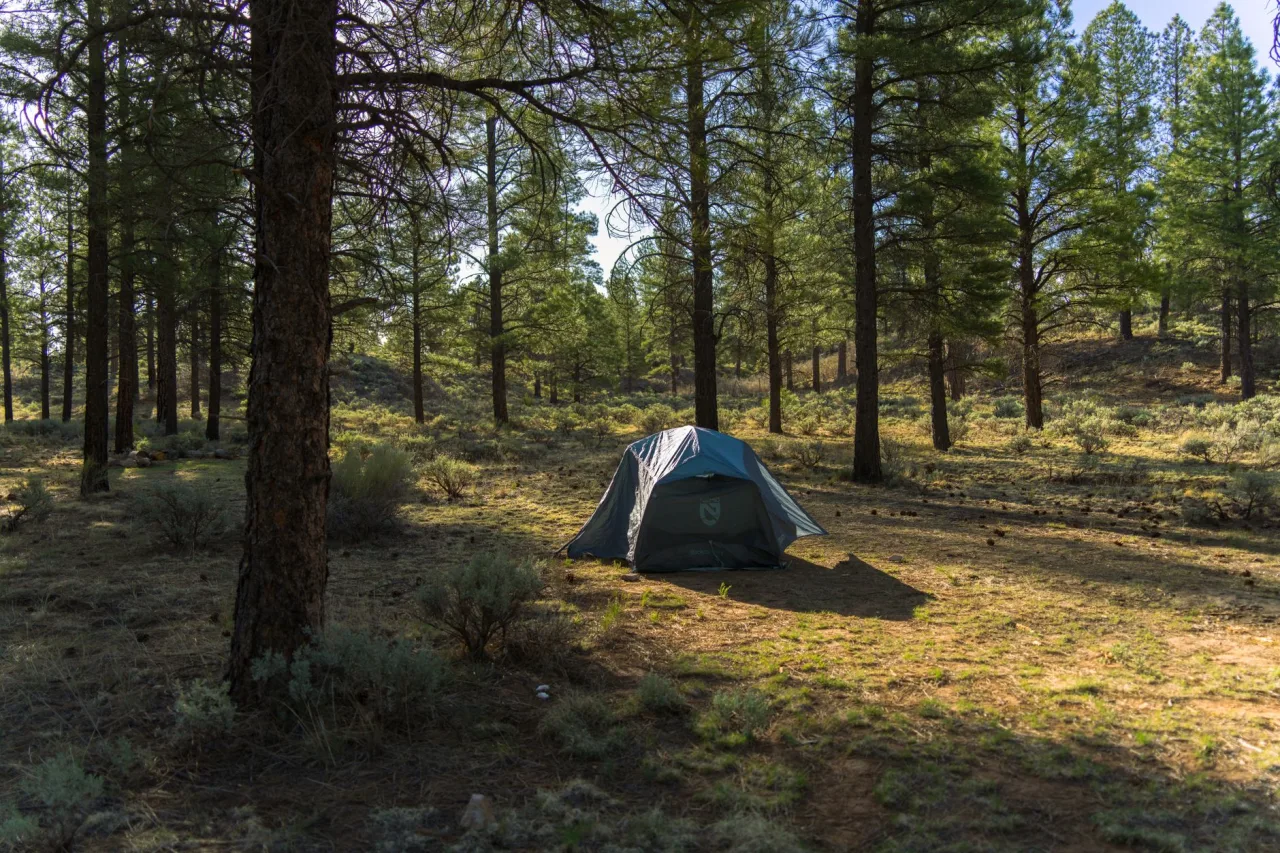
Finding a legal spot is a research task, not a matter of pulling over anywhere that looks empty. Work through these steps:
- Identify the public land nearest you: a national forest, grassland, or Bureau of Land Management area is usually your best bet.
- Contact the managing agency, such as the local forest or field office, or check their website for dispersed camping rules and closures.
- Get the agency's map. The Forest Service provides Motor Vehicle Use Maps that show which roads are open and where dispersed camping is allowed.
- Check for seasonal restrictions, fire bans, and permit requirements, all of which change through the year.
- Scout for existing, previously used sites rather than creating a new clearing, which reduces your impact.
The federal Recreation.gov platform is mainly for reservations at developed sites, but it is a reliable way to identify which agencies manage the land around you and to see official rules, which helps you find nearby areas where dispersed camping may be allowed.
The rules you must not ignore
Dispersed camping is a privilege that stays available only when people follow the rules. Typical requirements on US public land include:
- Camping at least a set distance from water sources. A common restriction is staying more than 300 feet from lakes and streams.
- Keeping a distance from roads and developed areas, and using existing pull-offs where required.
- Observing stay limits. Many public lands cap dispersed stays at 14 days within a given period.
- Following all fire restrictions, which can mean no open flames at all during dry spells.
Warning: rules are local and enforced
Distances, stay limits, and fire rules differ by forest and district, and rangers do check. Confirm the specific rules for your chosen area before you go, and never assume that what is allowed in one place is allowed in another.
Leave No Trace is not optional
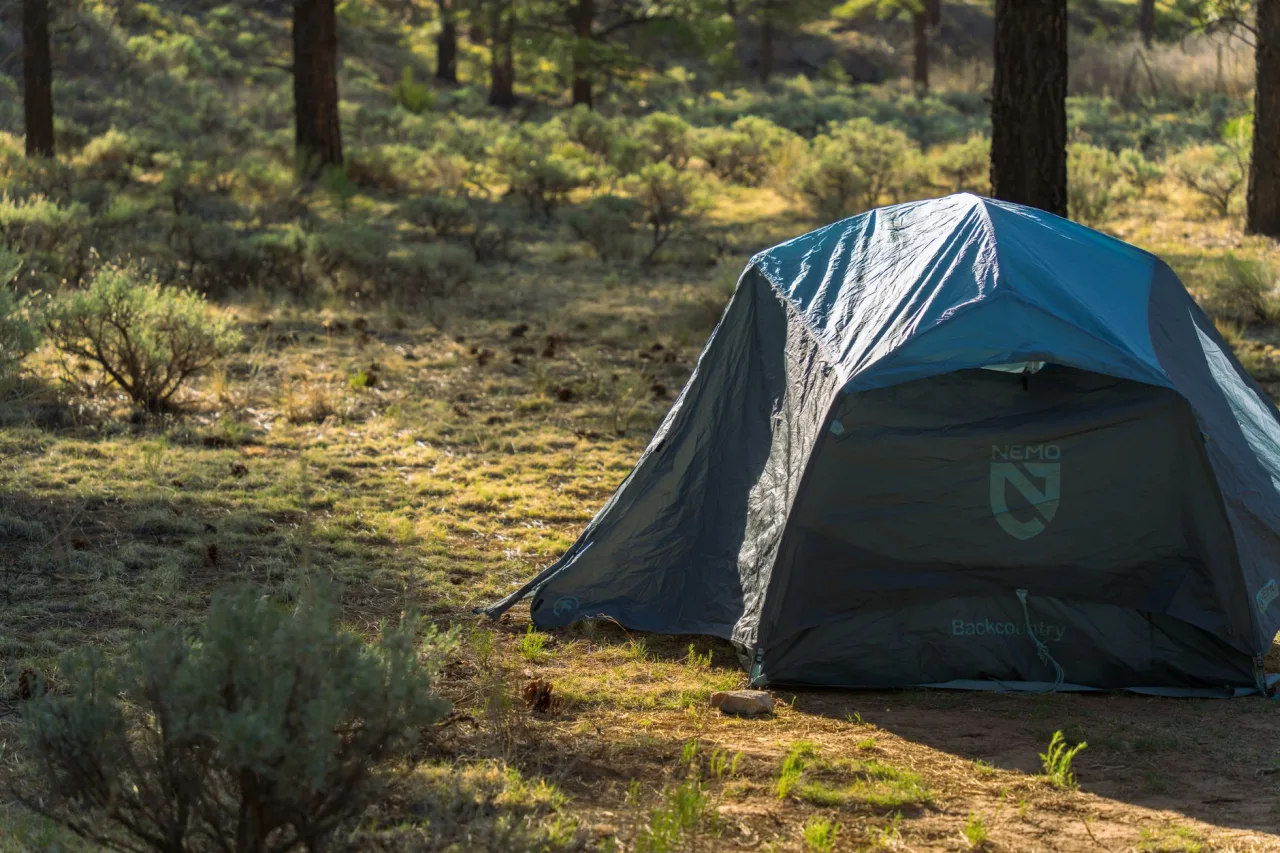
With no trash service or toilets, your habits are the only thing protecting the land. Follow the seven Leave No Trace principles: plan ahead and prepare, travel and camp on durable surfaces, dispose of waste properly, leave what you find, minimize campfire impacts, respect wildlife, and be considerate of others. In practice that means packing out all your rubbish, burying human waste properly or packing it out, and camping on bare ground rather than fragile vegetation.
Be fully self-sufficient
Dispersed camping rewards preparation and punishes the unprepared. Bring more water than you think you need, since there is none on site. Carry a way to store and pack out trash, a method to deal with human waste, and a fully charged means of navigation and communication, remembering that signal is often absent. A reliable, weatherproof tent matters more when there is no shelter nearby, so see our guide to the best backpacking tents if you are hiking to your spot.
If you are boondocking in a vehicle, plan your power and water carefully, and know how far you are from the nearest resupply. Our RV camping near me guide covers the practicalities of finding vehicle-friendly access.
When a developed campground is the smarter choice
Dispersed camping is not always the right call. If you are new to camping, travelling with young children, or want any facilities at all, a developed campground is safer and simpler. There is no shame in easing in. Our overview of national park campgrounds and our general camping near me guide both help you find sites with toilets, water, and a bit more structure. For a gentle family option, see our family friendly campsites guide.
Frequently asked questions
What is dispersed camping?
Dispersed camping, also called wild camping or boondocking, is camping outside a developed campground, typically on national forest or Bureau of Land Management land. There are no facilities such as water, toilets, electricity, or trash service, so you must be entirely self-sufficient.
Is dispersed camping free?
It is usually free on public land, but only where it is permitted. You must follow the managing agency's rules on where you can camp, how far you must stay from water and roads, stay limits, and fire restrictions. Confirm the local rules before you go.
How do I find dispersed camping near me?
Identify the nearest public land, such as a national forest or Bureau of Land Management area, then check the managing agency's rules and maps. The Forest Service provides Motor Vehicle Use Maps showing where dispersed camping is allowed and which roads are open. Always check for seasonal closures and fire bans.
What are the common rules for dispersed camping?
Typical rules on US public land include camping more than 300 feet from water sources, keeping a distance from roads and developed areas, observing a stay limit that is often 14 days, and following all fire restrictions. Exact rules vary by area, so confirm them locally.
Do I need a permit for dispersed camping?
It depends on the area. Some places require no permit, while others require a free or paid permit, especially during fire season or in high-use areas. Check with the specific land manager before your trip, since requirements change seasonally.
More guides on Campgrounds & Campsites
Have a question or a topic to suggest?
We read every message. Tell us what you would like to see next on the blog.
Get in touchYou may also like
Highlands End Campsite: Find and Compare
Searching for "Highlands End campsite" usually means you want a clifftop pitch in West Dorset with a sea view and easy access to the Jurassic Coast. This guide is not a fake booking directory.
Family Friendly Campsites: Find and Compare
A "family friendly" label on a campsite means very little on its own. What actually makes a trip smooth with kids is a specific set of features, safety details, and rules that you can check in advance.
Cb Smith Campground: Find and Compare
If you are searching for "CB Smith campground," you probably want to camp close to the Fort Lauderdale and Miami area without driving hours to a remote forest. This guide explains what C.B.