Tents & Gear
Best Backpacking Tent (2026 Guide)
Weight, freestanding vs trekking pole, fabrics and price: the real tradeoffs behind choosing a lightweight shelter you can carry.
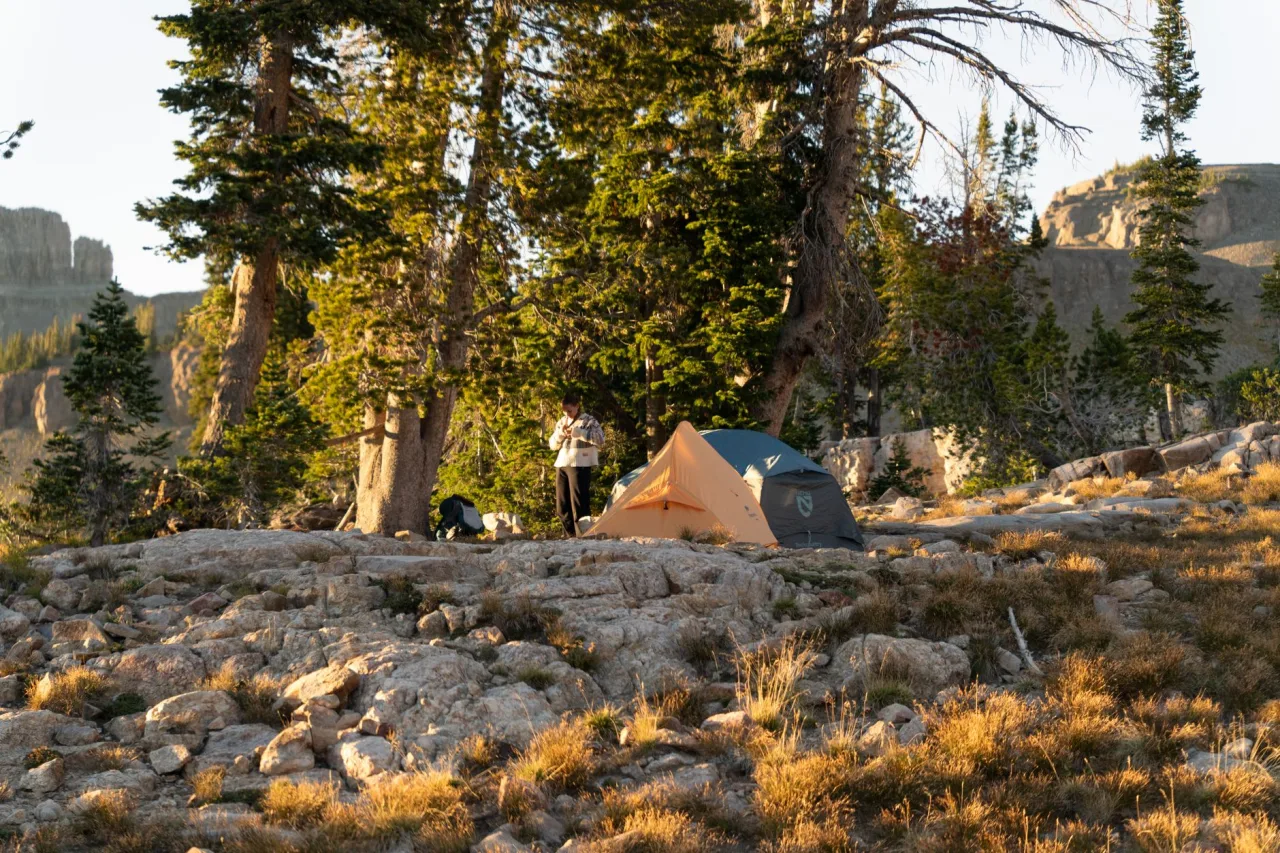
A backpacking tent has one hard job: to protect you from the weather while weighing as little as possible on your back. This honest buyer's guide is not a fake leaderboard. It explains the real tradeoffs between weight, space, weather protection and price so you can choose a shelter that matches your trips and your budget.
The short version
- Backpacking tents trade interior space and durability for low weight. The lighter you go, the more skill and care setup requires.
- Judge weight by the packed weight for the whole tent, and share it across your group to cut carry weight.
- Freestanding tents are easier to pitch anywhere, trekking pole tents are lighter but need good ground and technique.
- Set a budget band first. Paying more mostly buys less weight and better fabric, not more room.
How a backpacking tent differs from a camping tent
A car camping tent optimises for space and comfort because weight does not matter when it travels in a boot. A backpacking tent flips that priority: every gram is carried on your back for miles, so designers strip weight from everything, using thinner fabrics, fewer and lighter poles, smaller floors and lower ceilings. The result is a shelter that packs down to the size of a water bottle but asks you to accept a cosier, more delicate home.
That is the core tradeoff to understand before you shop. If you mostly drive to your pitch, you do not need a backpacking tent and would be more comfortable in a roomier model from our camping tent guide. If you carry your shelter on foot, weight becomes the number that shapes every other decision.
Weight: the number that drives everything
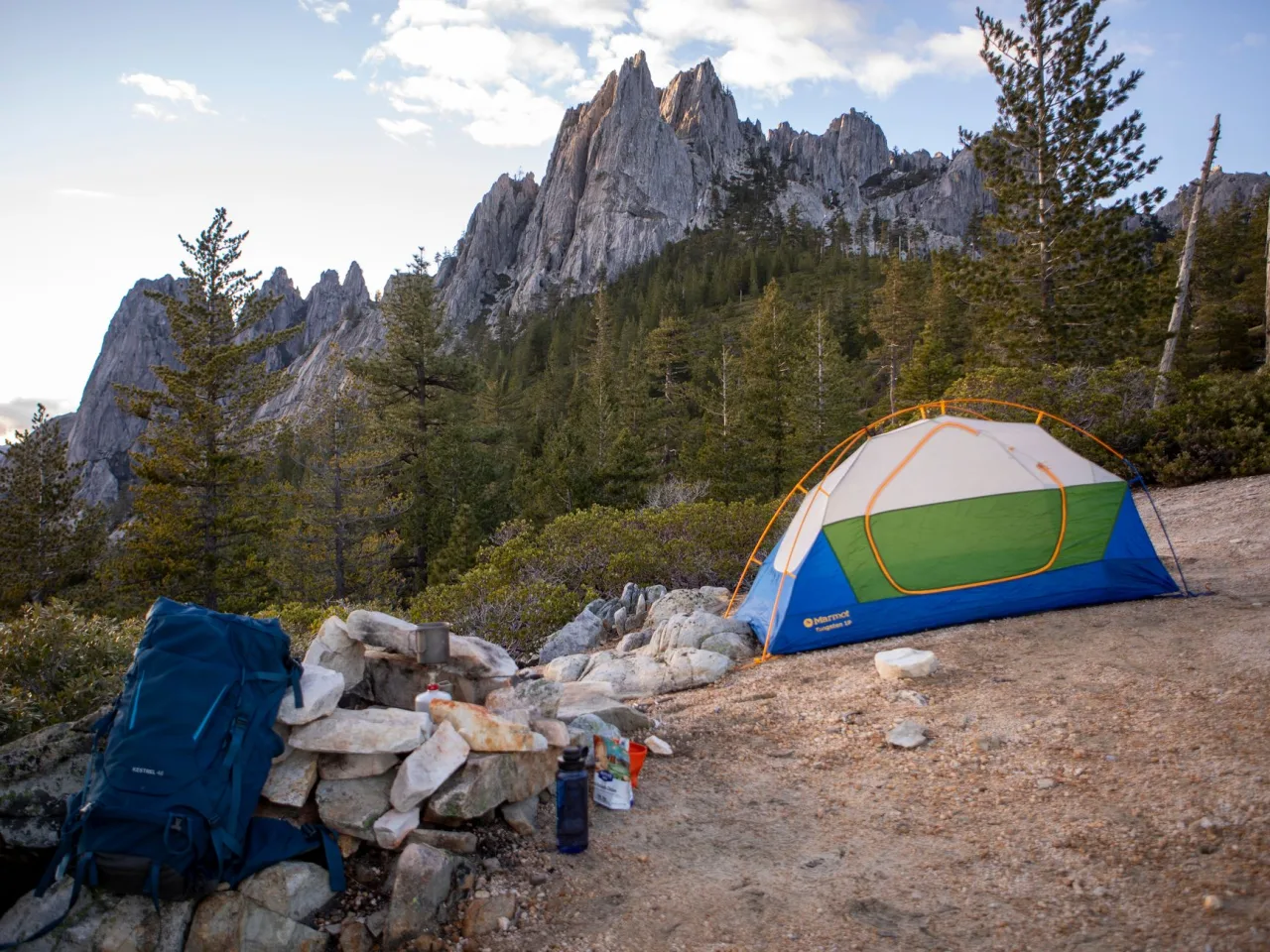
Backpackers obsess over weight for good reason, and it helps to know the vocabulary. Base weight is the weight of your pack without food, water and fuel, the consumables that vary by trip. According to Wikipedia's overview of ultralight backpacking, some hikers define ultralight as a base weight under 4.5 kilograms, and the shelter is one of the biggest single items you can cut.
When comparing tents, read the packed weight, the total weight of everything you carry, rather than the optimistic minimum trail weight that leaves out pegs and the stuff sack. A useful trick is to share a two person tent between two hikers, one carrying the poles and pegs and the other the fabric, which roughly halves each person's load. As the same source notes, the lightest tents are single wall designs, though many double wall tents are also very light.
Freestanding or trekking pole tents
Backpacking shelters split into two broad families, and the choice affects both weight and how easy they are to pitch.
- Freestanding tents use their own dedicated poles to stand up without stakes. They pitch on almost any surface, including rock and hard ground, and are forgiving for beginners, at the cost of a little extra pole weight.
- Trekking pole tents use your walking poles as the structure, saving the weight of dedicated poles entirely. They are lighter and cheaper on paper, but they need good staking ground, more setup skill, and you must be carrying trekking poles.
For a first backpacking tent, a semi freestanding or freestanding design is usually the friendlier choice. Once you have the skills and want to shave weight, trekking pole shelters become attractive. The lightest single wall tents save the most weight but can suffer more condensation, so weigh that against the grams saved.
Field tip
Practise pitching a trekking pole or lightweight tent several times at home before a trip. These shelters reward technique, and a tent that is fiddly in the garden becomes genuinely difficult in wind and rain on a mountainside.
Weather protection and fabrics
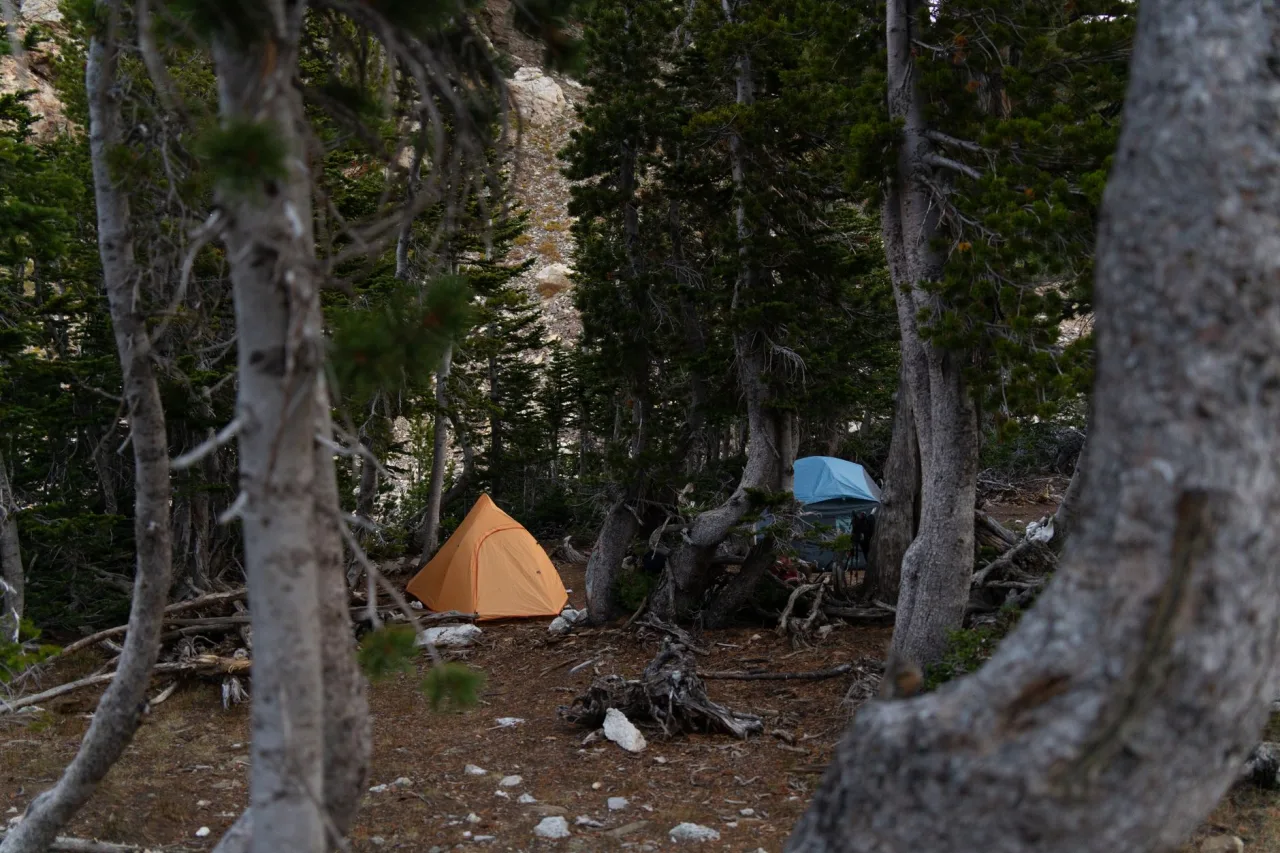
Lightweight does not have to mean flimsy, but it does mean paying attention to the details. Waterproofing is measured as a hydrostatic head in millimetres, and because backpacking fabrics are thin, taped seams and a well designed rainfly matter enormously. Wikipedia's overview of tent construction explains that synthetic fabrics are coated with silicone or polyurethane for water resistance, and that flexible aluminium alloy poles offer a strong, light structure.
Fabric thickness is described in denier, a measure of the yarn weight, where a lower denier is lighter but more fragile. Ultralight tents use very low denier fabrics that demand a groundsheet or footprint to protect the floor from punctures. Match the tent to your season too: a three season tent handles rain, wind and light snow, while genuine winter mountaineering needs a stronger four season shelter that weighs more.
Livability in a small space
Even on a weight budget, a few features make a lightweight tent far more pleasant to live in. Look for two doors and two vestibules on a two person tent so each hiker has their own entrance and gear storage. Check the peak height and whether the walls are steep enough to sit up in, and look at the floor length if you are tall. Good ventilation, through mesh and vents, is the main defence against the condensation that plagues small, low volume tents.
A vestibule, the covered area outside the inner door, is where wet boots and packs live so the sleeping area stays dry. Never cook inside the tent or a closed vestibule because of fire and carbon monoxide risk. Pair your shelter with a light sleep system from our sleeping bag guide and a compact camping pillow to sleep well without adding bulk.
Budget bands: what your money buys in 2026
Prices vary by brand, region, season and sales, so treat these as realistic ranges and confirm the current price when you buy.
- Entry level (roughly 80 to 180 in your local currency): heavier but functional. Fine for occasional trips and shorter hikes where a little extra weight is acceptable.
- Mid range (roughly 180 to 400): the sweet spot, with a good balance of low weight, durable fabric and livable features for regular backpackers.
- Premium (400 and up): the lightest fabrics and poles, refined designs and premium materials for those chasing minimum weight over many miles.
In backpacking tents, extra money buys lower weight and better materials rather than more space. Decide how much weight saving is worth to you, and remember that a slightly heavier tent you can afford and pitch confidently beats an ultralight one you struggle with.
Matching the tent to your trips
The right backpacking tent depends on where and how you hike. Weekend warriors on maintained trails can prioritise comfort and durability over the last few grams. Long distance and ultralight hikers, covering big daily mileage, will value every gram cut and accept a smaller, more delicate shelter. Group hikers should think about splitting a shared tent to reduce individual loads. For the wider picture of trip planning and where you are allowed to pitch, the United States National Park Service camping pages cover responsible backcountry camping, and our complete camping guide ties the kit together.
Looking after a lightweight tent
Ultralight fabrics are thin by design, so a little care keeps them going for many trips. The single most important habit is to protect the floor. Use a footprint or a cut piece of groundsheet under the tent to guard the low denier floor against sharp stones and roots, and clear the pitch of debris before you lay the tent down.
Pitch with the right tension too. A drum tight pitch sheds wind and rain and stops the fabric flapping, which is what causes long term wear, so learn to adjust the guy lines properly. In camp, keep the inner dry by managing condensation with the vents, and shake out any moisture in the morning.
At home, always dry the tent fully before storage, because a packed damp tent grows mildew that degrades the waterproof coating. Store it loosely rather than tightly compressed, carry a small repair kit with fabric tape and a pole splint on the trail, and reproof the flysheet when water stops beading. Treated well, a good backpacking tent lasts many seasons of hard miles.
Frequently asked questions
How much should a backpacking tent weigh?
Weight depends on your priorities, but many backpackers aim for a shelter under roughly 1.5 kilograms for two people, and ultralight hikers go well below that. Read the packed weight rather than the minimum trail weight, and share a tent across your group to cut each person's load.
Are freestanding or trekking pole tents better?
Freestanding tents pitch on almost any surface and are easier for beginners, at a small weight penalty. Trekking pole tents are lighter and cheaper because they use your walking poles, but they need good staking ground and more setup skill. Beginners usually prefer freestanding designs.
What does denier mean for a tent?
Denier measures the thickness of the fabric yarn. A lower denier fabric is lighter but more fragile and prone to punctures, so ultralight tents often need a groundsheet to protect the floor. A higher denier fabric is heavier but tougher and more suited to rough ground.
Can I use a backpacking tent for family camping?
You can, but it will feel cramped, because backpacking tents sacrifice space and comfort to save weight. For family car camping where weight does not matter, a roomier camping or family tent is far more comfortable. Use a backpacking tent only when you carry it on foot.
How much should I spend on a backpacking tent?
Most backpackers are well served in the mid range, roughly 180 to 400 in your local currency, though prices vary by brand and season so confirm at purchase. Extra spending mainly buys lower weight and better fabrics rather than more space, so decide how much weight saving is worth to you.
More guides on Tents & Camping Gear
Have a question or a topic to suggest?
We read every message. Tell us what you would like to see next on the blog.
Get in touchYou may also like
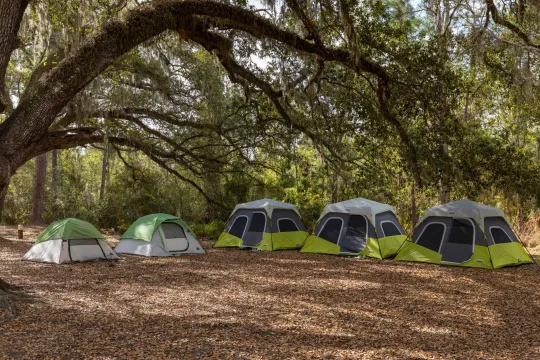
Best Camping Tent 2026: Family Picks
Roomy family and car camping tents built for comfort over several nights. How to choose one by space, weather protection and budget in 2026.
Best 2 Person Tent in 2026
A 2 person tent is the most versatile shelter you can own, small enough to carry and pitch alone, big enough for a couple or a solo camper who likes room to spread out.
Best Sleeping Bags for Camping in 2026
For campground and car camping trips, the best sleeping bag is not the lightest one on the shelf, it is the one that keeps you warm and comfortable for the nights you actually camp.