Campervan Guide · RV Parks & Resorts
Campervan Sites: The Complete Guide
The main types of campervan site, what they cost, what facilities to expect and how to choose the right pitch for your trip.
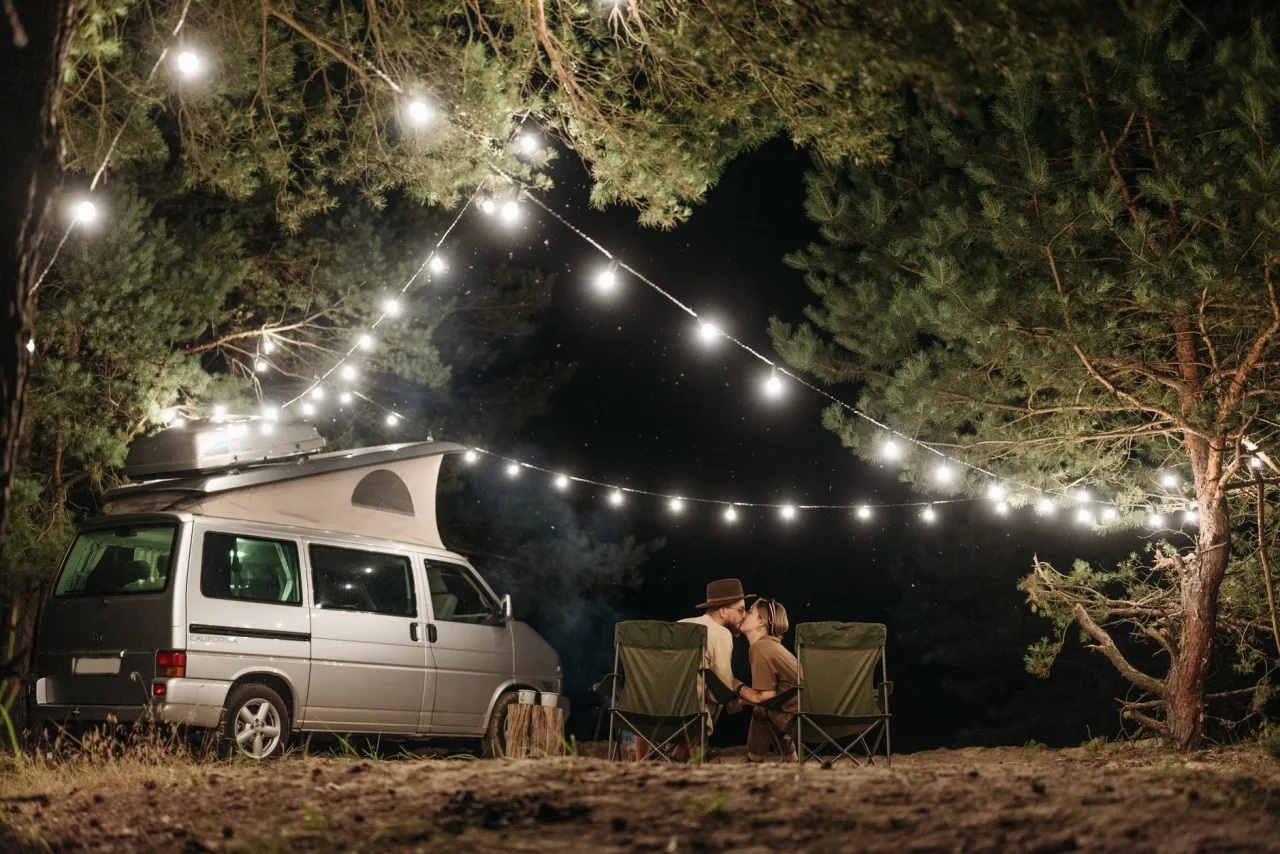
A campervan gives you the freedom to sleep almost anywhere, but where you actually pitch up shapes the whole trip. This complete guide explains the main types of campervan sites, what they cost, what facilities to expect and how to choose the right one, so you can plan with confidence rather than guesswork.
The short version
- Campervan sites range from fully serviced holiday parks to simple farm pitches and overnight stopovers with no facilities.
- Electric hookup, often shortened to EHU, is the single feature people most often wish they had booked.
- Prices commonly sit somewhere around 15 to 45 pounds a night in the UK and a similar band in euros across Europe, varying widely by season and facilities.
- Match the site type to the trip: serviced parks for comfort, small pitches for quiet, stopovers for one-night travel.
What counts as a campervan site
A campervan is a self-propelled vehicle with living space built in, generally smaller and easier to drive than a large motorhome, which tends to be bigger and more focused on comfort. Because campervans are compact and self-contained, the places they can legitimately stay are broader than tent campsites alone. A "campervan site" is really any pitch designed or permitted for you to park and stay overnight, from a landscaped holiday park to a farmer's field.
Understanding that spectrum matters because the word "site" hides enormous variety. One listing might promise a heated shower block, restaurant and pool, while another is a gravel bay with a waste point and nothing else. Neither is better in the abstract; they suit different trips. If you are new to the whole idea, our wider camping guide and the RV camping guide give useful context on how vehicle-based stays compare to tents.
The main types of campervan site

It helps to picture campervan sites as a ladder from most serviced to most basic. Each rung trades facilities for a lower price, more space or more solitude.
- Holiday and touring parks: the full package, with hardstanding pitches, hookups, toilet and shower blocks, and often shops, pools and play areas.
- Small certificated or member sites: tiny sites limited to a handful of vans, quieter and cheaper, sometimes with only basic facilities.
- Farm and pub pitches: informal grass pitches on private land, often just a field with a tap, increasingly bookable through dedicated apps.
- Aires and stopovers: designated overnight areas, common across France and mainland Europe, giving a service point and a place to park for a night rather than a holiday base.
- Wild or free camping: staying on unmanaged land, which is legal only in some regions and with the landowner's permission or under specific local rules.
The classic campervan trip mixes several of these: a serviced park to reset and do laundry, then a run of quieter pitches or stopovers in between. For a purely local, ready-to-book angle, our campervan sites near me directory guide focuses on finding a pitch close to where you are now.
Facilities: what you get and what to check
The gap between a five star park and a basic pitch is mostly facilities. Knowing which ones you actually need stops you overpaying for extras or, worse, arriving somewhere with none of the essentials.
- Electric hookup (EHU): a mains connection for charging, heating and running a fridge. Vans with modest leisure batteries benefit most.
- Fresh water and waste: a tap to fill your tank and points to empty grey water and the toilet cassette. Even minimal sites usually offer these.
- Toilets and showers: a shared block, valuable if your van has no bathroom or you want to conserve onboard water.
- Hardstanding versus grass: hardstanding drains better and is a safer bet in wet weather, while grass can be pleasant in summer but risky after rain.
Tip: If your van has a small leisure battery and no solar, book electric hookup for any stay longer than a night or two, especially in colder months when heating and shorter days drain power fast.
What campervan sites cost

Prices swing with the seasons and with how much a site offers, so treat any number as a range to confirm at booking rather than a fixed rate. In the UK, a serviced pitch commonly falls somewhere around 15 to 45 pounds a night, with small basic sites at the lower end and premium coastal parks in peak summer well above it. Across mainland Europe you will see a comparable spread in euros, and designated stopover aires are often cheaper still or occasionally free.
Several factors move the price: peak school holidays and bank holidays cost more, hookup and hardstanding add a few pounds, and extras such as an awning, an extra person or a dog can each carry a small fee. Booking longer stays sometimes unlocks a lower nightly rate. Whatever the headline figure, check exactly what is included so the total does not surprise you at arrival.
How to find and book a site
Finding a good campervan site is mostly about using more than one source and reading between the lines of the listings. A large booking platform is convenient for comparing many parks at once, while smaller sites are sometimes only bookable by phone or through a specific club or app. Cross-checking a couple of sources gives you both breadth and the hidden gems.
When you have candidates, judge them the way you would any stay: read the most recent reviews first, look for repeated comments about cleanliness and noise, and confirm the practical details of access and van size limits. The same comparison discipline that works for a RV park applies here. If you enjoy the more upscale, resort-style end of vehicle travel, the RV resorts guide shows what the top tier looks like.
Etiquette, access and the law
Campervan freedom comes with responsibility, and getting this wrong is how popular spots end up closed to vans. Overnight parking rules differ enormously between countries, regions and even individual car parks, so never assume that parking somewhere for the night is allowed just because it is quiet. Look for signs, check local regulations and, on private land, get the owner's permission.
Once you are set up, camp lightly. Following widely used outdoor ethics such as the Leave No Trace principles keeps sites welcoming: take your rubbish, empty waste only at proper points, keep noise down and leave the pitch as you found it. Responsible vanning protects access for everyone who comes after you.
Warning: "Wild camping" is not universally legal. In many places it requires permission or is restricted to specific areas. Emptying waste anywhere other than a designated point is both antisocial and often illegal, so always use proper facilities.
Choosing the right site for your trip
The best campervan site is the one that matches how you want to travel that week. A touring holiday with children leans toward serviced parks with facilities and things to do. A quiet couples' trip suits small certificated sites or farm pitches. A long-distance journey across Europe runs best on a chain of aires and stopovers, with the occasional full park to recharge and clean up.
Think about your van's self-sufficiency too. A model with a decent leisure battery, solar, a fixed toilet and a large water tank can happily use basic pitches, while a simpler conversion will lean on serviced sites for power and washing. Match the site to both the trip and the van, and you get the freedom campervanning promises without the avoidable headaches.
Frequently asked questions
What is the difference between a campervan and a motorhome site?
In practice the sites overlap heavily, because both vehicles need similar facilities such as hookup, water and waste points. The main difference is size: motorhomes are larger, so some smaller or tighter-access campervan pitches may not suit them. When booking, always check the maximum vehicle length a site accepts.
Do I need electric hookup at a campervan site?
It depends on your van and the season. If you have a small leisure battery and no solar, hookup is very useful for charging, heating and running a fridge, especially in colder months. Well-equipped vans with solar and larger batteries can often manage without it for short stays.
How much does a campervan site cost per night?
In the UK, serviced pitches commonly cost somewhere around 15 to 45 pounds a night, with basic sites cheaper and premium coastal parks in peak season higher. Mainland Europe shows a similar spread in euros, and designated stopover aires are often cheaper or occasionally free. Prices vary by season and facilities, so confirm when booking.
Can I stay overnight anywhere in a campervan?
No. Overnight parking and wild camping rules vary by country, region and even individual car park. Some places allow it, many restrict or ban it, and private land needs the owner's permission. Always check local signs and regulations rather than assuming a quiet spot is allowed.
What facilities do basic campervan sites usually have?
Even minimal sites typically offer a fresh water tap and points to empty grey water and toilet waste. Toilets, showers, electric hookup and hardstanding are common at serviced parks but not guaranteed at small or informal pitches, so read the listing carefully before booking.
More guides on RV Parks & Resorts
Have a question or a topic to suggest?
We read every message. Tell us what you would like to see next on the blog.
Get in touchYou may also like

Campervan Sites Near Me: Find a Pitch
A right-now playbook for finding a local campervan pitch: which apps to combine, how to filter for van access, what to pay and why you should always keep a backup.

RV Camping: The Complete Guide
What RV camping involves, the main motorhome and towable types, honest costs, hook-ups explained, and how to pick a good site as a beginner.
Caravan: The Complete Guide
Caravan types, buying and running costs, safe towing, and how to choose a caravan that fits how you actually travel.