Tents & Gear
Best Camping Lantern (2026 Guide)
Match lumens to the job, prioritise runtime over peak brightness, and pick the power source that fits your trips.

A camping lantern is the small piece of kit that quietly makes or breaks an evening at camp. This is an honest buyer's guide rather than a fake ranking: it walks through brightness, runtime, power source and durability so you can choose a lantern that fits your camping style and your budget without overpaying.
The short version
- Match brightness to the job: a soft glow for a tent, hundreds of lumens for a picnic table, more again to light a whole pitch.
- Runtime matters more than peak brightness. A lantern that dies at midnight is useless whatever its maximum output.
- LED rechargeable lanterns suit most campers now, but replaceable batteries win for long off grid trips.
- Never use a fuel burning lantern inside a tent. The fire and carbon monoxide risk is serious.
Why a dedicated lantern beats a torch
A head torch is brilliant for tasks and walking, but it throws a narrow beam that blinds whoever you look at and leaves the rest of camp dark. A lantern does the opposite job: it casts soft, even light in every direction so a group can cook, eat, play cards or find their gear without anyone being dazzled. Most campers end up carrying both, a torch for focused tasks and a lantern for ambient area light.
Modern camping lanterns are almost all LED. As Wikipedia notes in its overview of lanterns, LED units are popular because they are more energy efficient and rugged than older fuel or incandescent designs, and prices have fallen sharply. That efficiency is exactly what you want at camp, where every watt from a battery has to last the night.
Brightness: how many lumens do you need?
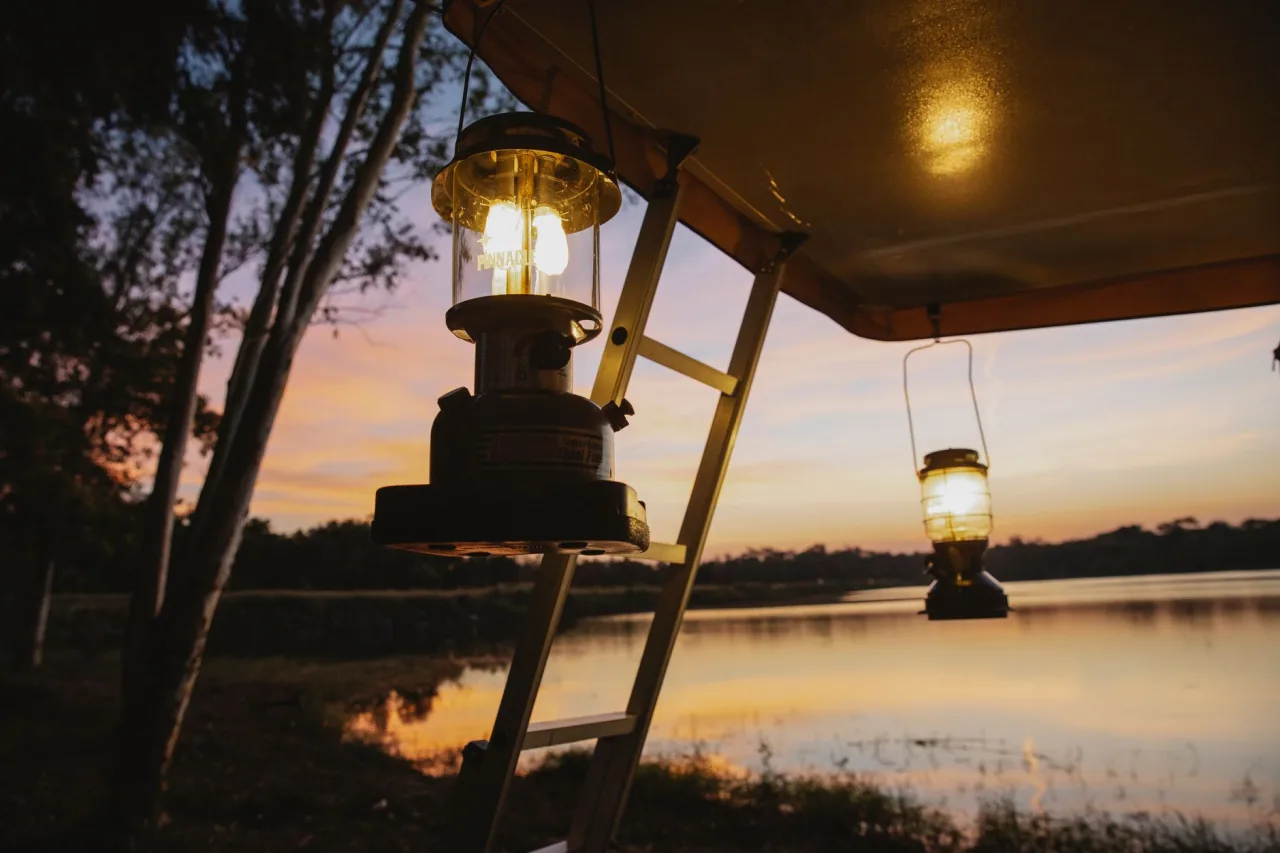
Lumens measure total light output. More is not always better, because a very bright lantern can be harsh in a small tent and drains its battery fast. Think in terms of the job:
- Tent and reading light (roughly 50 to 150 lumens): a gentle glow that will not keep everyone awake, ideal hung from the tent ceiling.
- Table and cooking light (roughly 150 to 400 lumens): enough to light a picnic table, prepare food and see what you are doing.
- Area and group light (400 lumens and up): lights a whole pitch or a large group gathering, useful as a single main lantern for a family.
The most practical lanterns have adjustable brightness, so you can run them low to save power and turn them up when you need to. A dimmable lantern effectively covers all three roles in one unit.
Runtime and why it beats peak brightness
Manufacturers love to quote a headline lumen figure, but the number that decides your evening is runtime. A lantern rated for hundreds of lumens might only sustain that for a couple of hours before fading. Always read the runtime at a realistic brightness, not just the maximum, and look for a figure that covers a full evening plus a margin.
Because output and runtime trade against each other, the smart move is to run your lantern at the lowest comfortable setting. A lantern set to a soft glow can last many times longer than the same unit at full blast. If you camp for several nights off grid, add up the hours you need and choose accordingly, or carry a backup power source.
Field tip
A frosted or diffused lantern is much kinder on the eyes than a bare, glary LED. If a lantern is uncomfortably bright to look at directly, look for one with a diffusing globe or shade so the light spreads softly across camp.
Power source: rechargeable, batteries or fuel
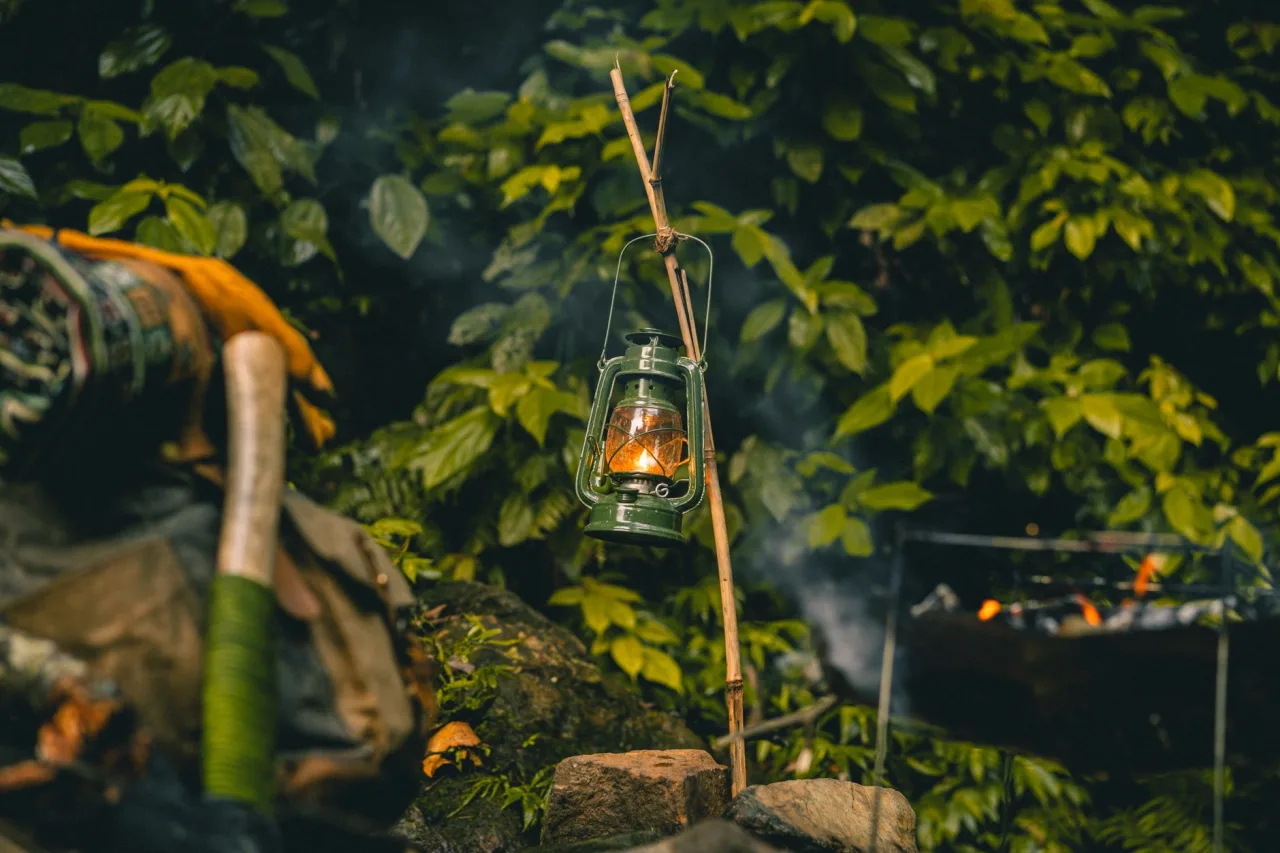
How your lantern is powered shapes how you use it, so choose the type that matches your trips.
- Rechargeable (USB) LED lanterns: convenient, no ongoing battery cost, and many double as a power bank to top up a phone. The catch is that once the internal cell is flat on a long trip, you need a way to recharge it, such as a power bank or solar panel.
- Replaceable battery LED lanterns: the most reliable for long off grid trips, because you simply carry spare cells. They keep going indefinitely as long as you pack enough batteries.
- Fuel lanterns (gas or liquid fuel): very bright and traditional, but they burn fuel, run hot and must never be used inside a tent. They suit open air use where you want a lot of light and do not mind carrying fuel.
For most campers in 2026, a rechargeable LED lantern with a replaceable or backup power option is the flexible sweet spot. If you plan to charge from the sun, pair it with a compatible solar panel or power bank.
Durability, weight and handy features
A camping lantern gets knocked, dropped and rained on, so build quality counts. Look for a water resistance rating if you camp in wet climates, a sturdy hanging hook or magnetic base for hands free use, and a stable base so it does not tip on uneven ground. Collapsible lanterns pack down small, which is welcome if space is tight.
Weight only matters if you carry the lantern far. For car camping, a heavier, brighter lantern is fine. For backpacking, every gram counts, so a tiny collapsible LED or a lightweight tent light is the better call, a theme we cover in our backpacking tent guide. Useful extras include a dimmer, colour temperature options, a battery level indicator and a red night mode that preserves your night vision.
Budget bands: what your money buys in 2026
Prices vary by brand, region, season and sales, so treat these as realistic ranges and confirm the current price when you buy.
- Entry level (roughly 10 to 25 in your local currency): a simple, single brightness LED lantern. Perfectly adequate as a backup or for occasional summer use.
- Mid range (roughly 25 to 60): the sweet spot, with adjustable brightness, longer runtime, USB charging and often a power bank function.
- Premium (60 and up): high output, long runtime, rugged waterproof build, solar options and refined features for frequent or serious campers.
A single mid range lantern suits most trips. Many families carry one bright main lantern for the table plus a couple of cheap small lanterns for the tents, which is a cost effective way to light a whole pitch.
Safety note
Only fuel burning lanterns produce carbon monoxide and open flame. LED and battery lanterns are safe to use inside a tent, but never bring a gas or liquid fuel lantern into any enclosed space. When in doubt, choose an LED lantern for tent use.
Putting it together with the rest of your kit
Lighting is one part of a comfortable camp. Plan it alongside your shelter and sleep system so everything works together. Our guides to the best camping tents, camping stoves and camping in general help you build a kit list where the lantern earns its place rather than being an afterthought.
How many lanterns should you bring?
One lantern rarely covers a whole camp comfortably, so experienced campers think in terms of a small lighting kit rather than a single unit. A common and cost effective setup is one brighter main lantern for the cooking and eating area, plus a small, dim lantern in each tent for reading and finding gear at night. That way nobody is left in the dark when the group splits up.
For a solo or couple trip, a single dimmable lantern plus a head torch usually does everything you need. For a family, add a cheap small lantern per tent so children have their own soft light. If you camp off grid for several nights, plan your total lighting hours in advance and carry either spare batteries or a way to recharge, such as a power bank or solar panel.
Think about placement too. A lantern hung high casts light over a wider area than one sitting on a table, and a lantern with a diffuser spreads light more evenly. A little planning means you light the whole pitch with less total output, which saves battery and money.
Frequently asked questions
How many lumens does a camping lantern need?
Around 50 to 150 lumens is plenty for a tent or reading, 150 to 400 lumens lights a table and cooking area, and 400 lumens or more lights a whole pitch. A lantern with adjustable brightness covers all three jobs and lets you save power by running it low.
Are rechargeable or battery lanterns better?
Rechargeable USB lanterns are convenient and often double as a power bank, which suits most trips. Replaceable battery lanterns are more reliable for long off grid trips because you can simply carry spare cells. The best choice depends on whether you can recharge while away.
Is it safe to use a lantern inside a tent?
LED and battery lanterns are safe inside a tent because they produce no flame or fumes. Fuel burning gas and liquid fuel lanterns are not safe indoors, as they create fire risk and carbon monoxide. For tent use, always choose an LED lantern.
Why does runtime matter more than brightness?
Peak brightness is only useful if the lantern sustains it long enough for your evening. Output and battery life trade against each other, so a lantern that is very bright may fade quickly. Check the runtime at a realistic brightness and run the lantern low to make it last.
How much should I spend on a camping lantern?
Most campers are well served in the mid range, roughly 25 to 60 in your local currency, though prices vary by brand and season so confirm at purchase. That band buys adjustable brightness, good runtime and USB charging. Budget lanterns work fine as backups.
More guides on Tents & Camping Gear
Have a question or a topic to suggest?
We read every message. Tell us what you would like to see next on the blog.
Get in touchYou may also like
Best Camping Tent 2026: Family Picks
Roomy family and car camping tents built for comfort over several nights. How to choose one by space, weather protection and budget in 2026.
Best Camping Stoves 2026: Budget Picks
A good camping stove turns a cold pitch into a place to cook and warm up. This honest buyer's guide compares gas, liquid fuel and wood stoves, and shows what each budget tier really gets you.

Best Backpacking Tent (2026 Guide)
How to choose a backpacking tent by understanding the real tradeoffs between weight, space, weather protection and price for your kind of trips.