Tahoe Camping
Lake Tahoe Campground: How to Choose
State parks, forest sites and the Nevada shore, compared honestly, with bear rules, altitude tips and realistic prices.
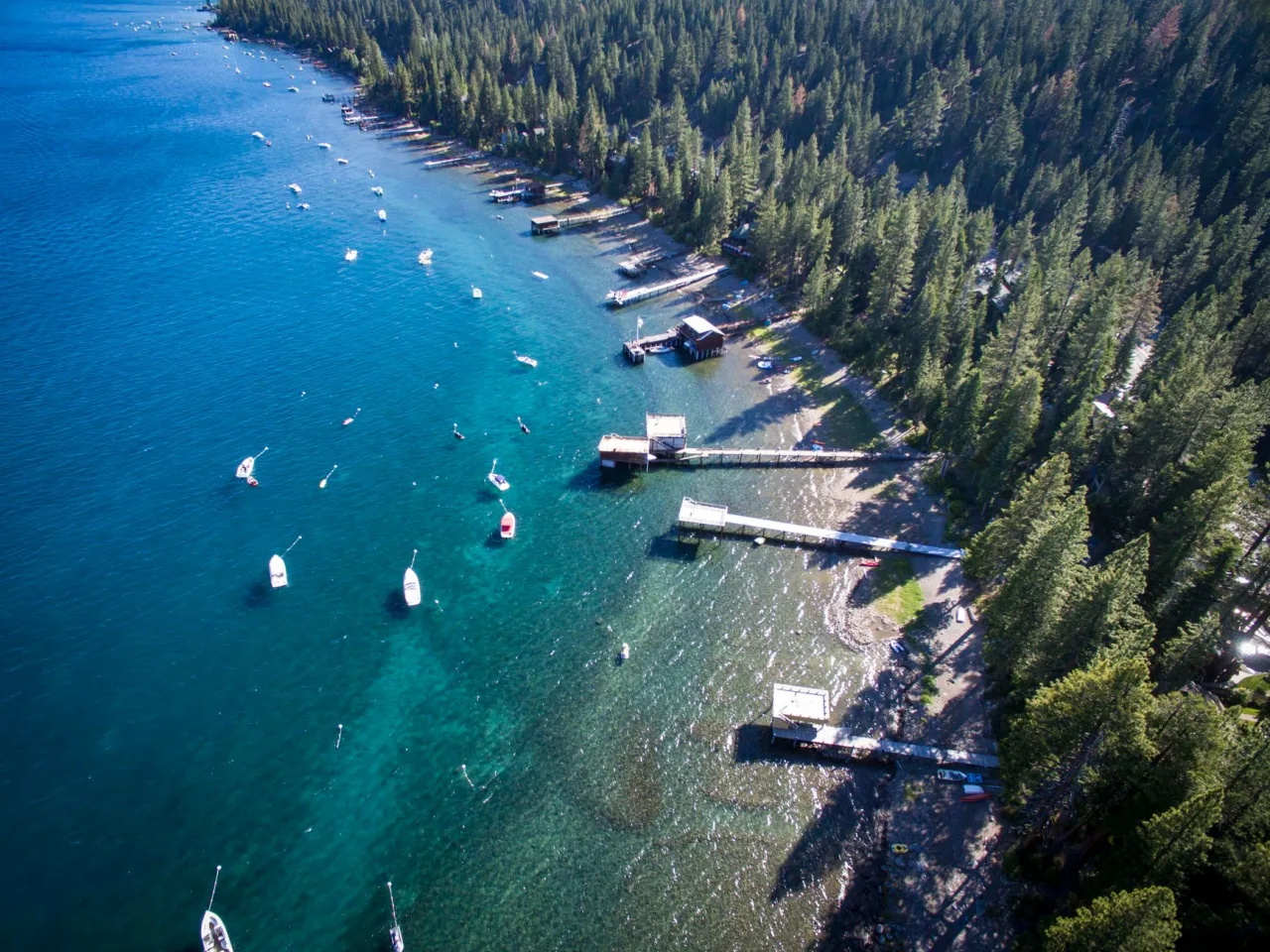
Searching for a Lake Tahoe campground turns up dozens of options spread across two states, three land agencies, and a 6,225 foot elevation that changes how you pack. This guide is not a fake leaderboard. It is an honest, practical framework for how to find, compare, and choose a good Tahoe campsite, plus the confirmed facts you need to book with confidence.
The short version
- Lake Tahoe straddles the California and Nevada border and is the largest alpine lake in North America, so campsites split across state parks, national forest land, and the Nevada shore.
- More than 75% of the lake's watershed is national forest, managed by the Lake Tahoe Basin Management Unit of the U.S. Forest Service, and most federal sites book through Recreation.gov.
- This is bear country. Every developed campground requires food stored in bear-proof lockers, and rangers enforce it.
- Popular summer weekends fill months ahead. Book as early as your chosen agency allows, and have a backup site in mind.
What "Lake Tahoe campground" actually covers
Lake Tahoe is not a single park with one booking desk. It is a large freshwater alpine lake sitting at 6,225 feet above sea level on the California and Nevada line, and the shoreline is carved up between several managers. That is the single most important thing to understand before you search, because a "best campground" list means nothing until you know which agency runs the site and how far it is from the water.
Broadly, your options fall into three buckets: California State Parks on the west and south shores, U.S. Forest Service sites scattered around the basin, and Nevada State Parks on the east shore. Each uses its own reservation window, its own fee structure, and its own rules. A good Tahoe trip usually means picking the agency first, then the specific site.
The three types of Tahoe campground, honestly compared
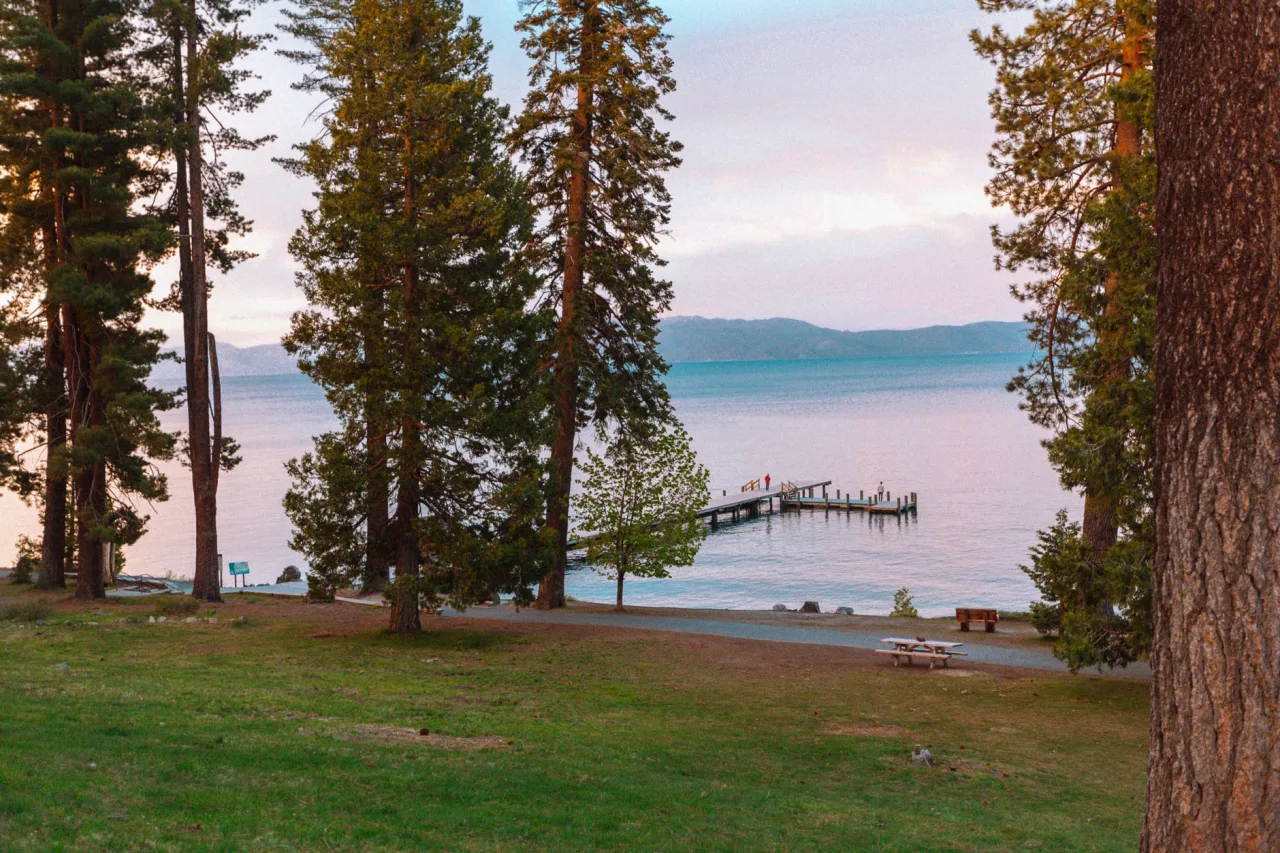
Rather than rank named sites, compare them by category so you can match a campground to your trip.
- California State Parks (west and south shore): These include lakefront and near-lake sites at parks such as Emerald Bay State Park and Ed Z'berg Sugar Pine Point State Park. Emerald Bay operates the Eagle Point Campground and a hike or boat-in campground on the north side of the bay. Expect classic granite-and-pine scenery and strict bear rules.
- U.S. Forest Service: More than 75% of the lake's watershed is national forest land under the Lake Tahoe Basin Management Unit. Forest Service campgrounds tend to be more numerous and sometimes cheaper, with a mix of lakeside and inland sites. Most reserve through the federal system.
- Nevada State Parks (east shore): The Nevada side offers a quieter, high-desert-meets-alpine feel with its own reservation portal and fees.
If you want to understand the wider category before you narrow to Tahoe, our lake campground guide covers what separates a great waterfront site from an average one anywhere in the country.
What good looks like: a Tahoe campsite checklist
Use the same criteria to judge any Tahoe site so you are comparing like with like:
- Distance to water: "Lakefront" and "lake view" are very different. Read the site map, not the marketing.
- Elevation and shade: At over 6,000 feet the sun is intense by day and nights cool fast. Tree cover matters.
- Bear-proof storage: Confirm each site has a metal food locker. This is non-negotiable at Tahoe.
- Hookups vs primitive: Tent campers and RVers want different things. Check for electric, water, and dump-station access.
- Noise and access road: Sites near a highway or boat ramp are convenient but louder.
- Cancellation policy: Windows differ by agency. Know it before you pay.
Altitude tip
Tahoe sits high enough that some visitors feel mild altitude effects on the first day. Drink more water than usual, go easy on alcohol the first night, and do not plan your hardest hike for arrival day. Water also boils at a lower temperature up here, so cooking takes a little longer.
Typical costs, as realistic ranges
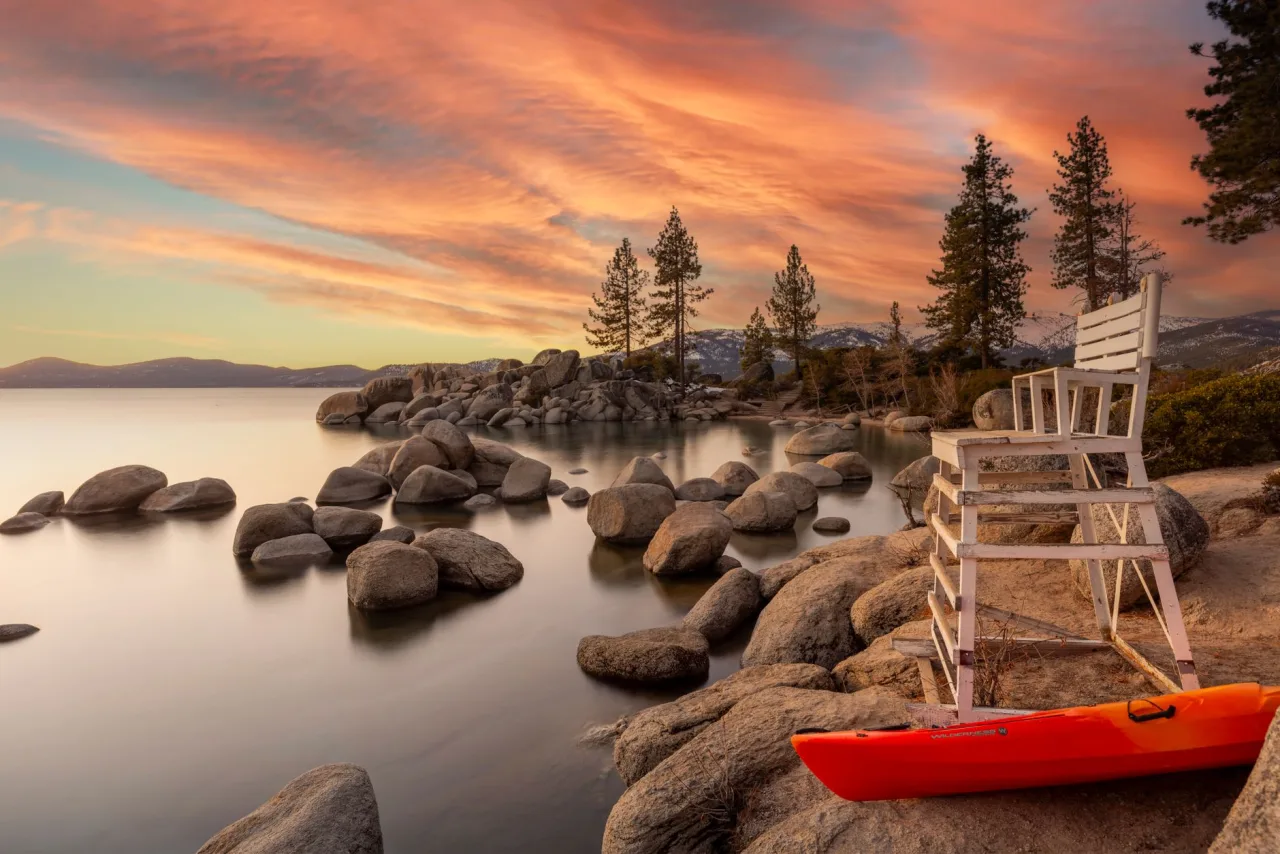
Prices vary by season, agency, and site type, and every rate should be confirmed at the point of booking. As a realistic 2026 planning range, developed public campgrounds around Tahoe commonly run from roughly the mid-$20s to the high-$40s per night for a standard tent or RV site, with premium lakefront and boat-in sites landing higher. As a confirmed reference point, the boat-in campground at Emerald Bay State Park is listed at $35 per night. Private RV resorts with full hookups sit above the public-land range. Always treat any figure you see as a starting point and verify when you reserve, because peak-season and holiday pricing shifts.
If you are weighing a motorhome trip rather than a tent, our RV campgrounds guide breaks down hookups, dump stations, and rig-length limits in more depth.
How to book without missing out
Tahoe is one of the most popular summer destinations in the western United States, and prime weekends disappear early. Reservation windows differ by agency, so the practical rule is simple: know your target site's window and book the moment it opens. California State Parks generally lets you reserve up to six months in advance of your arrival date, which is why lakefront sites for July can vanish in January. Federal Forest Service and national-park-style sites reserve through Recreation.gov, the official federal booking platform, which handles reservations across national forests and other public lands. Nevada State Parks uses its own system.
- Decide your shore and agency first.
- Find the exact reservation window for that agency.
- Set a calendar reminder for the day and time the window opens.
- Have a second-choice site ready in case your first fills.
Tent camping vs RV vs cabins at Tahoe
Your setup narrows your choices fast. Tent campers have the widest selection, including walk-in and boat-in sites that RVs cannot reach. RV and trailer travelers need to check length limits, hookups, and turning access, since some older Tahoe loops were built for smaller rigs. Cabins and lodges exist around the lake but are a separate booking category from campgrounds. If you are still deciding on shelter, our best tent guide helps you match a tent to alpine conditions, where afternoon thunderstorms and cold nights are both realistic.
Safety and etiquette in bear country
Tahoe has an active black bear population, and food-conditioned bears are a genuine problem. The rules exist to protect both you and the animals:
- Store all food, coolers, toiletries, and scented items in the provided bear locker, never in your tent or car cabin.
- Do not leave dishes or trash out overnight.
- Keep a clean cooking area away from where you sleep.
- Follow posted quiet hours, typically starting around 10 pm.
Emerald Bay State Park, for example, requires food in bear-proof lockers and enforces quiet hours. Treat these as universal Tahoe rules rather than one park's quirk.
Season warning
Many Tahoe campgrounds are seasonal and only open once snow clears, often from around June into early autumn. Higher and shadier sites open later. Never assume a site is open in spring or late fall, and always confirm dates before you drive up, especially after a heavy snow year.
Building your Tahoe shortlist
Put it together like this. Choose your shore based on the vibe you want, quieter east, busier and more developed south, classic scenery on the west. Filter by your shelter type and hookup needs. Confirm the reservation window and cost range with the managing agency. Then lock in early and prepare for altitude and bears. That process beats any static ranking, because the "best" Tahoe campground is the one that is open, bookable, and suited to how you travel. For a broader foundation before your trip, our complete guide to camping covers gear, planning, and Leave No Trace basics.
Frequently asked questions
Is Lake Tahoe in California or Nevada?
Both. Lake Tahoe straddles the border between California and Nevada. California covers the west and south shores while Nevada covers the east shore, which is why campgrounds are managed by different agencies depending on which side of the lake they sit on.
How far in advance should I book a Lake Tahoe campground?
As early as your chosen agency allows. California State Parks generally lets you reserve up to six months before your arrival date, and popular summer weekends often fill the moment the window opens. Federal sites book through Recreation.gov and Nevada uses its own portal, so check the specific window for your target site.
How much does camping at Lake Tahoe cost?
Prices vary by season, agency, and site type and should be confirmed when booking. As a realistic 2026 range, developed public campgrounds commonly run from the mid-$20s to the high-$40s per night, with premium lakefront and boat-in sites higher. The boat-in campground at Emerald Bay State Park is listed at $35 per night.
Do I need to worry about bears when camping at Tahoe?
Yes. Tahoe is active black bear country. Every developed campground requires that you store all food and scented items in the provided bear-proof lockers, never in your tent or car cabin, and rangers enforce this. Keeping a clean site protects both you and the bears.
When is Lake Tahoe camping season?
Many Tahoe campgrounds are seasonal and open only once snow has cleared, often from around June into early autumn. Higher and shadier sites open later. Always confirm opening dates with the managing agency before you travel, especially after a heavy snow year.
Can RVs camp at Lake Tahoe?
Yes, but check each site carefully. Many Tahoe loops were built for smaller rigs, so confirm length limits, hookup availability, and dump-station access before booking. Tent campers have the widest choice, including walk-in and boat-in sites that RVs cannot reach.
More guides on Campgrounds & Campsites
Have a question or a topic to suggest?
We read every message. Tell us what you would like to see next on the blog.
Get in touchYou may also like
Lake Campgrounds: How to Choose
An honest guide to finding, comparing and choosing a good lake campground anywhere, with a checklist for water access, shade, insects and boats, plus how to book the best waterfront sites.
Silver Lake Campground Guide
Silver Lake is a common lake name, so this guide focuses on the famous Silver Lake State Park in Michigan, with its dunes and ORV area, and a method for comparing and booking any Silver Lake campground.
Mammoth Campground: How to Choose
Which Mammoth do you mean? An honest guide to Yellowstone's year-round Mammoth Campground and the campgrounds around Mammoth Lakes, California.