RV Camping
Campsites for RVs Near Me
Length, hook-ups and access: how to find an RV site that fits before you book.
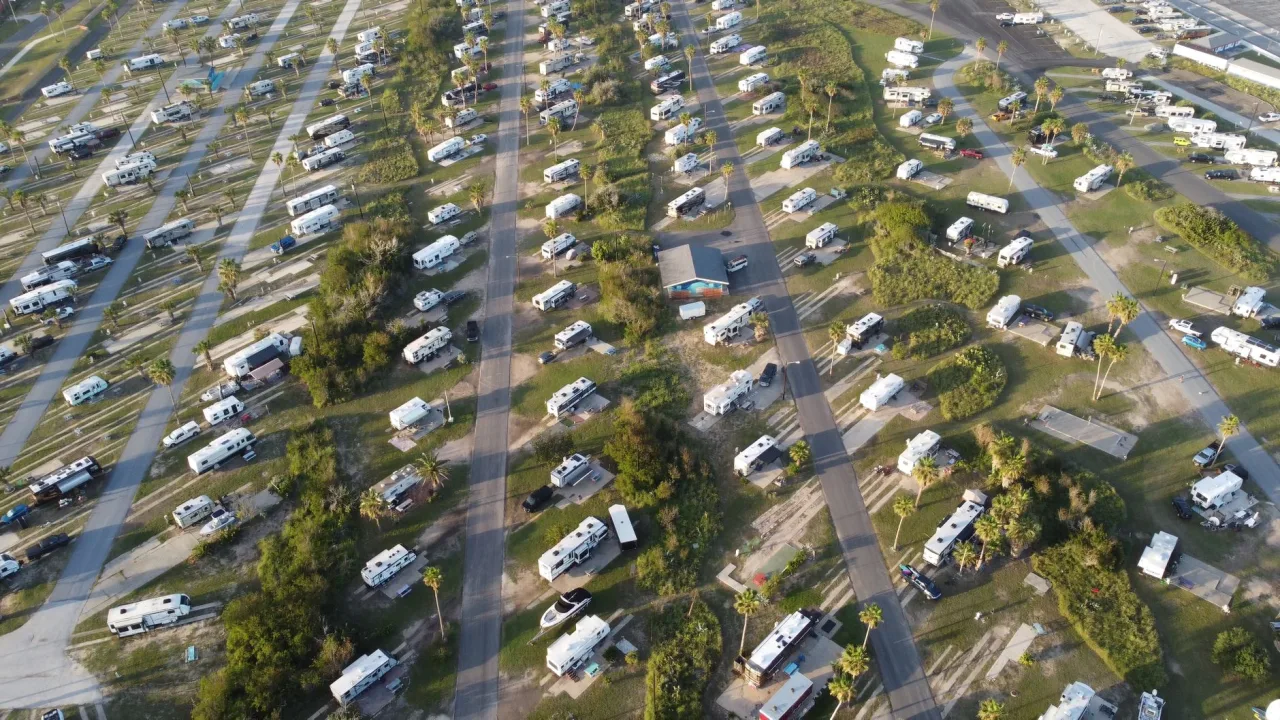
Finding "campsites for RVs near me" is a different job from finding a tent pitch, because your rig sets hard requirements: length, hook-ups, turning space and level ground. This guide is not a fake ranking of RV sites. It is a practical method for finding, comparing and choosing a campsite that will actually fit and serve your motorhome or trailer.
The short version
- Match the site to your rig first: maximum length, hook-up type and turning access rule out unsuitable sites fast.
- Full hook-up means electric, water and sewer at the pad; partial or dry sites need a plan for power and waste.
- Compare on pad surface, levelness and amp rating, not just nightly price.
- Fees vary by season, region and hook-up level, so confirm the full total when you book.
Why RV sites need a different search
A tent fits almost any flat patch of ground, but a recreational vehicle does not. RVs range from compact camper vans to large motorhomes and travel trailers, and each has living quarters that need power, water and waste handling. That turns "near me" into a filtering problem: many nearby campgrounds simply cannot take a big rig, so you rule sites out before you rank them.
Start by knowing your own numbers. Your rig's total length, including anything you tow, decides which pads and access roads work. Your electrical needs, commonly a 30-amp or 50-amp connection, decide which hook-ups suit you. And your water and waste setup decides whether you need a full hook-up or can manage with a dump station. Get these clear and the search gets far quicker. For the wider picture of RV travel, our complete guide to RV camping is a useful companion.
Understanding hook-ups and site types
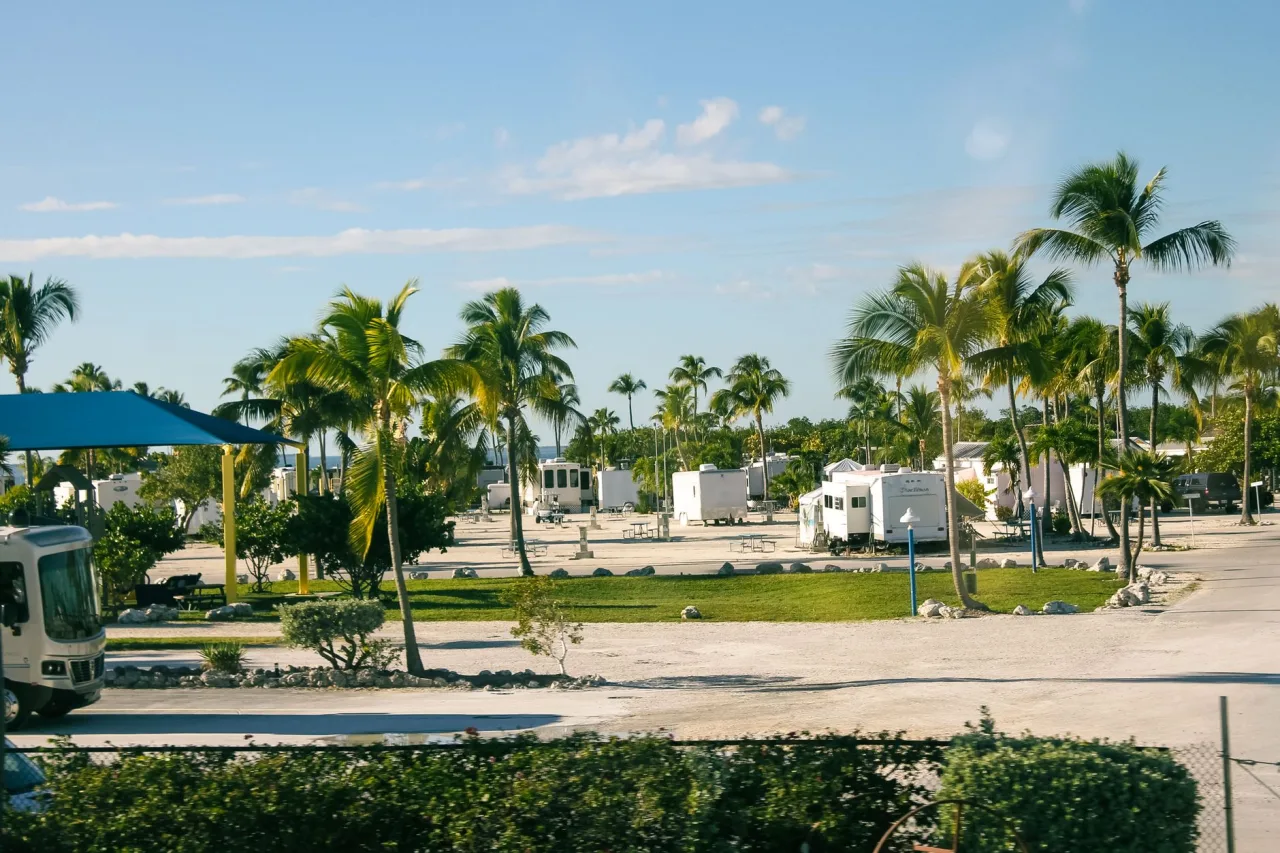
RV sites are usually described by their level of service. Knowing the vocabulary lets you filter accurately:
- Full hook-up: electric, water and sewer connections at the pad, so you can stay put without moving to empty tanks.
- Partial hook-up: typically electric and water but no sewer, so you use the campground dump station before leaving.
- Dry or primitive (boondocking): no connections at all, relying on your batteries, fresh-water tank and holding tanks.
- Pull-through versus back-in: pull-through pads are far easier for long rigs, while back-in sites need confident reversing.
Electrical service is the detail people most often get wrong. Larger motorhomes with heavy air conditioning usually want 50-amp service, while smaller rigs run happily on 30 amp, and an adapter does not add capacity. Confirm the amp rating a site offers before booking. If you are still choosing a park style, our guide to RV campgrounds compares developed parks and forest sites in more depth.
Where to search for RV-friendly sites
Build your shortlist from sources that show real availability and let you filter by rig needs:
- Official public-land booking sites: in the United States, Recreation.gov lists federal campgrounds and individual sites, many of which show maximum rig length and hook-up details.
- National and state park pages: the National Park Service camping pages explain which parks accept RVs and any size limits before you commit.
- Private RV-park directories and booking platforms: often the best fit for larger rigs, with full hook-ups and pull-through pads, though quality varies, so read recent reviews.
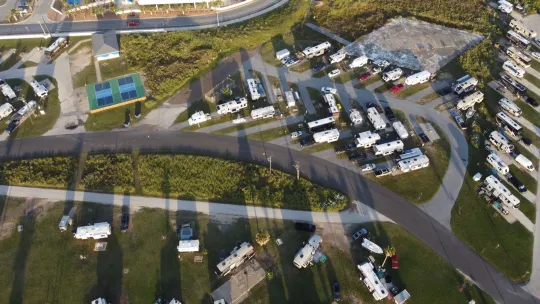
- Maps and satellite view: checking the approach roads and pad layout from above can reveal tight turns a listing never mentions.
Tip: Before booking a site that looks tight, check the satellite view of the access road and the pad itself. Low branches, sharp turns and narrow lanes cause more arrival-day stress than the pad size ever does.
The RV comparison checklist
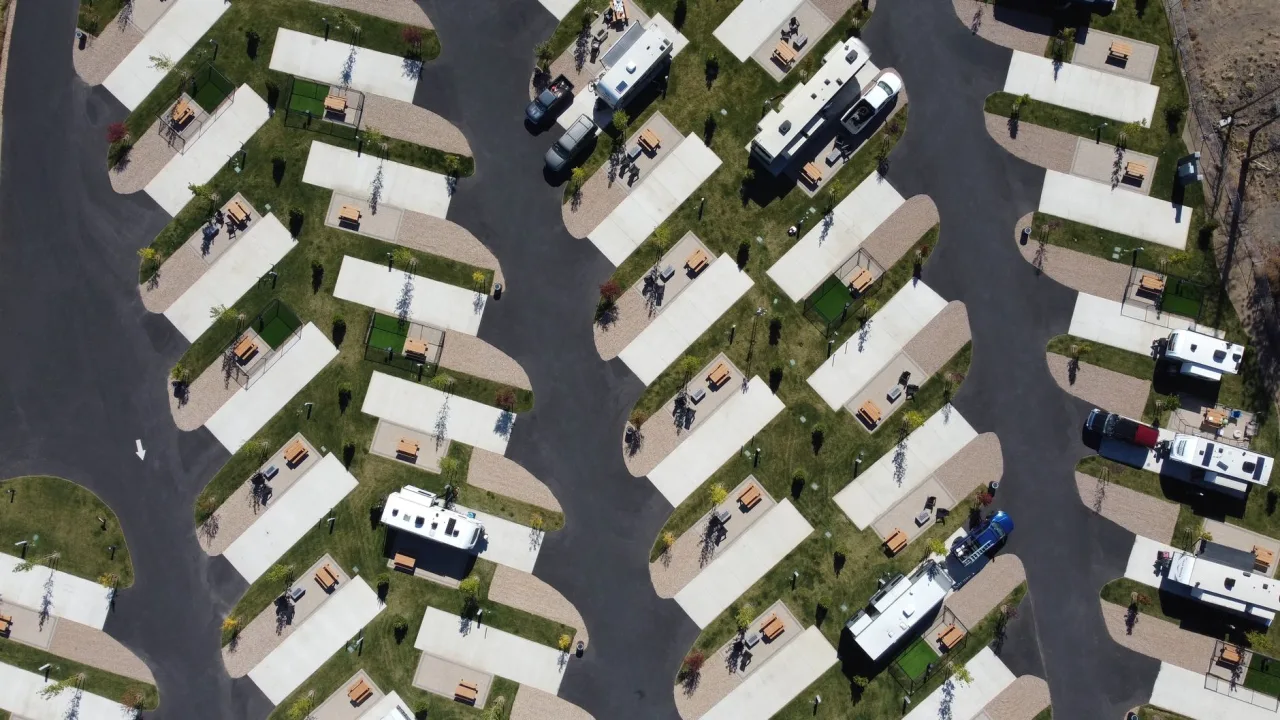
Once you have a few candidates that fit your rig, weigh them on the same criteria so you compare like for like:
- Maximum rig length and pad type: confirm your total length fits, and prefer pull-through if you are long or new to reversing.
- Hook-ups and amp rating: full, partial or dry, and 30 amp versus 50 amp, matched to your rig.
- Pad surface and levelness: firm, level gravel or concrete beats a soft or sloped pitch, especially in wet weather.
- Access and manoeuvring: road width, low branches, turning radius and spacing between sites.
- Waste and water: an on-site dump station and potable water fill matter even at partial-hook-up sites.
Read the last few months of reviews with an eye for other RVers describing tight access or unreliable power, since those problems rarely show in photos. The same disciplined comparison works for any location, as our guide to finding great camping spots near you lays out.
What RV sites typically cost
RV pitches usually cost more than tent pitches because of the utilities, and prices move with the season, region and hook-up level, so treat any figure as a range. As a rough guide, basic public-land RV sites with limited or no hook-ups sit at the lower end, developed private parks with full hook-ups sit in the middle, and RV resorts with pools, big-rig pads and extras sit at the top. Peak weekends and holidays push everything up, while midweek shoulder-season nights are the best value.
Watch for costs beyond the nightly rate: metered or surcharged electricity on long stays, extra-vehicle or extra-guest fees, and resort or booking fees. Some parks also charge for a dump if you are not staying. Always confirm the full total, including any utility charges, at checkout, since RV rates vary widely by site and season.
Big-rig access and common arrival mistakes
Most arrival-day stress comes from access rather than the pad itself. Long and tall rigs get caught out by low branches, tight entrance gates, sharp interior roads and, occasionally, height or weight limits on the approach. A pad that reads as generous in a listing can sit at the end of a lane that a forty-foot motorhome simply cannot round. This is why a satellite look at the route in, not just the site, is worth the two minutes it takes.
A few recurring mistakes are easy to avoid once you know them. Booking a back-in site when you are new to reversing turns setup into a spectacle, so favour pull-through pads while you build confidence. Assuming an adapter upgrades your power leaves you tripping breakers on a hot afternoon, so match the amp rating instead. And arriving after dark, when levelling, spotting hazards and connecting utilities are all harder, is the single change that causes the most avoidable problems. Booking a rig that fits with room to spare, rather than one that only just squeezes in, makes every stay calmer.
Arriving and setting up without stress
Good RV camping is mostly good preparation. A short routine avoids most arrival-day problems:
- Confirm the essentials: your dates, rig length, hook-up type and amp rating, plus any slide-out clearance the pad needs.
- Arrive in daylight: levelling, reversing and connecting are all far easier before dark and quieter for neighbours.
- Save details offline: address, gate codes, arrival window and the park phone number, since signal is often poor on arrival.
- Keep a backup site: if your first choice is full or the access looks worse than expected, a bookmarked alternative saves the day.
Camping responsibly matters just as much in a rig. Follow the widely used Leave No Trace principles, dump only at proper stations, never let grey water run onto the ground, keep generator use to posted hours and respect quiet time. For those newer to rig types and terminology, the general overview of the recreational vehicle explains the main classes and how their living systems work.
Frequently asked questions
How do I know if a campsite will fit my RV?
Check the site's maximum rig length against your total length, including anything you tow, and confirm the pad type. Pull-through pads suit long rigs, while back-in sites need confident reversing. Reviewing the access road on a satellite map also reveals tight turns and low branches a listing may not mention.
What is the difference between full and partial hook-ups?
Full hook-up means electric, water and sewer connections at the pad, so you can stay put without moving to empty tanks. Partial hook-up is typically electric and water but no sewer, so you use the campground dump station before leaving. Dry sites have no connections at all.
Do I need 30-amp or 50-amp service?
It depends on your rig. Larger motorhomes with heavy air conditioning usually need 50-amp service, while smaller rigs run fine on 30 amp. An adapter lets you connect but does not add capacity, so match the amp rating to your rig and confirm what a site offers before booking.
How much do RV sites cost near me?
It varies by season, region and hook-up level. Basic public-land sites with limited hook-ups are cheapest, developed private parks with full hook-ups sit in the middle, and RV resorts cost the most. Peak weekends push prices up, so confirm the full total, including any utility or booking fees, at checkout.
Can I stay in an RV at a regular campground?
Sometimes, but only if the site accepts RVs and your rig fits the length limit and access. Many tent-focused campgrounds cannot take larger vehicles or offer no hook-ups, so filter specifically for RV-friendly sites and check the pad, power and turning space before you book.
More guides on Campgrounds & Campsites
Have a question or a topic to suggest?
We read every message. Tell us what you would like to see next on the blog.
Get in touchYou may also like
RV Campgrounds: Find and Compare
How to find, compare and choose an RV campground that matches your vehicle, your power needs and the kind of trip you want.
RV Camping: The Complete Guide
What RV camping involves, the main motorhome and towable types, honest costs, hook-ups explained, and how to pick a good site as a beginner.
Camper Campgrounds Near Me
How to find a campground that fits a camper van, truck camper or small trailer near you, from choosing hook-ups versus self-contained pitches to checking access and cost.