Outdoor Adventure · Camping & Outdoors (General)
Ziplining: The Complete Guide
How ziplining works, the different kinds, what it costs and, above all, how to tell a safe, well-run operator from a risky one before you clip in.
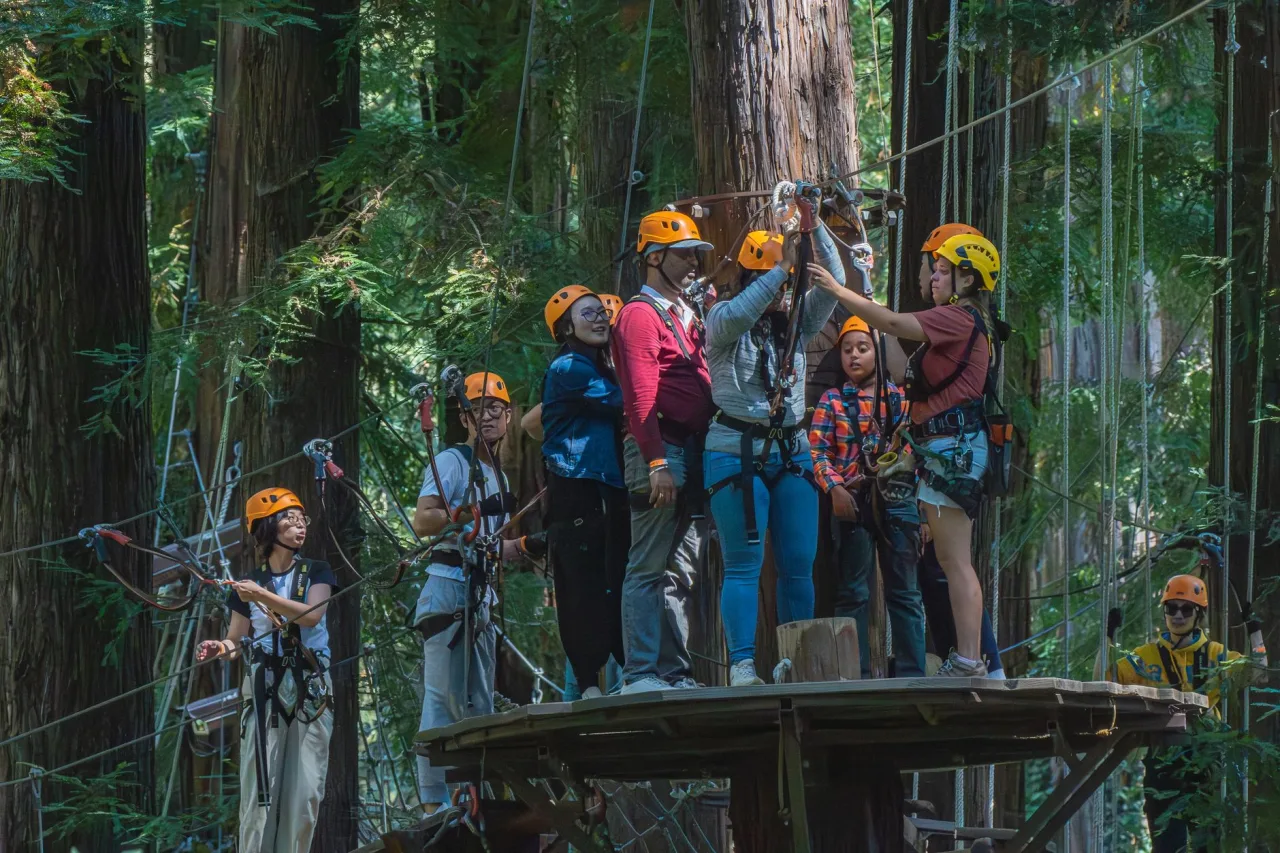
Ziplining is one of the few adventure activities that is genuinely for almost everyone: you are clipped to a cable, gravity does the work, and you cover ground you could never walk. This guide explains how it actually works, what the different kinds are, what it costs, and how to choose a safe operator, so a first ride is exciting for the right reasons and not the wrong ones.
The short version
- A zip-line is a pulley on an inclined steel cable. Gravity pulls you down the slope while a harness and trolley keep you attached the whole way.
- Braking is the part that matters. Good courses use an engineered braking system, not just gloves, and helmets are standard on almost any course of size.
- Kinds range from a backyard line to a canopy tour of multiple lines and bridges through the treetops, which is the version most holiday operators sell.
- Choose the operator, not the price. Trained guides, maintained gear, weight and age limits and a clear safety briefing separate a good course from a risky one.
What ziplining actually is
A zip-line, in the words of the encyclopedic definition, is a pulley suspended on a cable, usually stainless steel, mounted on a slope. You hold onto or, on any proper course, are attached to that pulley, and gravity carries you down the incline from the higher end to the lower. The grooved wheel inside the pulley, called a sheave, cuts friction so you pick up speed. It is a beautifully simple idea, and versions of it, ropeways moving people and cargo across valleys, have existed in mountainous regions for over two thousand years. What is new is the recreational version you book on holiday.
On a recreational course you wear a harness that connects to a removable trolley, and the trolley is what actually rides the cable. That distinction is the whole safety model: you are not gripping a handle and hoping, you are physically secured to the line from the moment you leave the platform to the moment you arrive. Smaller playground versions use a simple handhold instead, which is why those are low and slow. The serious ones are not.
How the braking works, and why it matters most
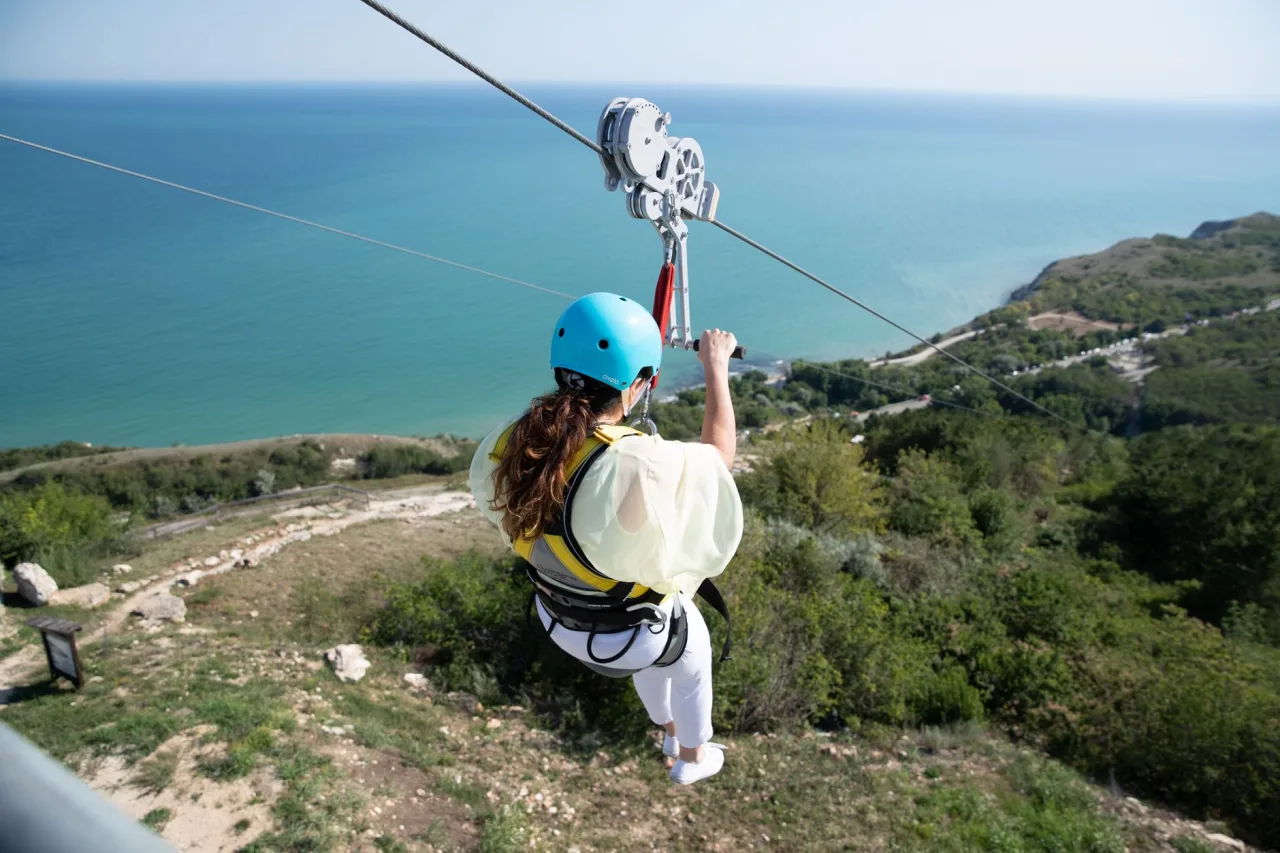
Here is the counterintuitive part: the exciting bit is the easy bit. Gravity happily gets you moving. The engineering problem a good course solves is stopping you safely at the far platform, because gravity will not do that for you. Braking systems fall into a few families:
- Friction braking, where the pulley or a block presses against the cable to slow you.
- Spring or counterweight arrestors, engineered devices at the end that absorb your momentum smoothly.
- Passive buffers, such as a net or padded mat that catches you at the endpoint.
- Manual braking, including a hand brake or, on older lines, a leather glove pressed against the cable.
The lesson for a first-timer is not to memorise these, but to notice which one your course uses. A modern commercial course should have an engineered, largely automatic braking system, so that stopping does not depend on you doing something perfectly at speed while nervous. If the entire stopping plan is "grab the cable with a glove," that is an older and less forgiving setup. Proper cable tensioning underpins all of it, which is one more reason maintenance and inspection matter.
Safety basics that should be non-negotiable: a helmet, which is required on almost all courses of any size; a harness fitted and checked by a guide, not by you; a clear briefing before you leave the ground; and staff who physically check your connection at each platform. If any of these is missing or rushed, that is your cue to slow the whole thing down and ask questions.
The main kinds of ziplining
"Ziplining" covers a wide range, and knowing which one you are booking sets your expectations correctly for both thrill and cost.
- Single recreational lines. One long, often fast, ride across a valley, gorge or lake. The purest hit of speed and height, over quickly.
- Zip-line parks and courses. A sequence of lines linked by platforms and walkways, often combined with an aerial adventure park of bridges and obstacles. A half-day out rather than a single ride.
- Canopy tours. A guided route through wooded, often mountainous terrain, using zip-lines and aerial bridges between platforms built in the trees. Marketed as ecotourism, these are the version most holiday and adventure-camp operators sell.
The canopy tour has an interesting origin worth knowing. According to the history of canopy tours, in the 1970s wildlife biologists rigged zip-lines to study the dense rainforests of Costa Rica without disturbing them. The commercial canopy tour grew directly out of that research, which is why the activity still carries a strong association with rainforest and conservation settings.
What ziplining costs
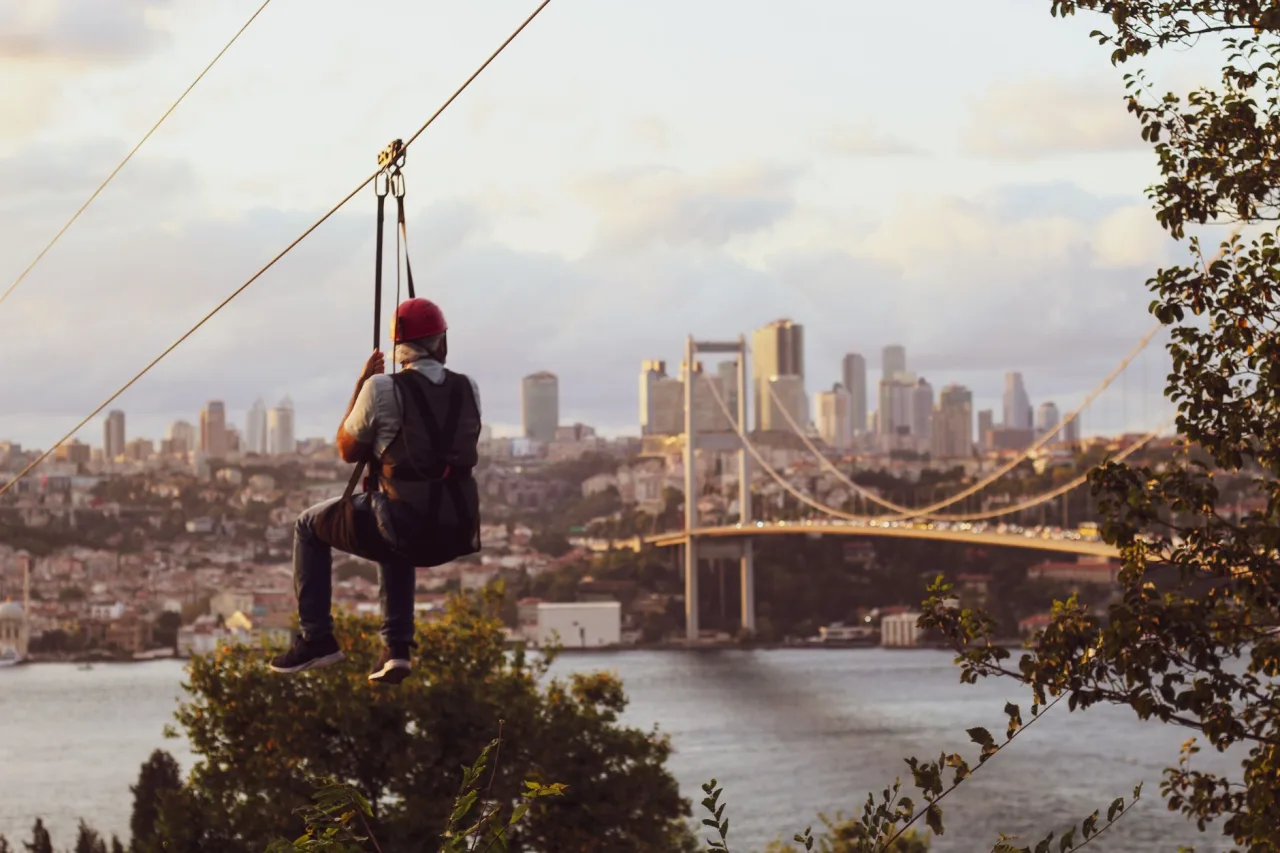
Prices vary widely by country, length and format, so treat any figure as a range that you confirm when booking rather than a fixed rate. As a realistic frame, a single-line or short experience is typically the cheapest option, a multi-line park or canopy tour costs more because it fills a half day and includes guides, and premium tours in famous locations sit at the top. What moves the price is the number and length of lines, whether guides are included, the location's fame, and season. Booking online in advance and travelling outside peak times usually costs less than paying at the gate on a busy summer weekend. Always check exactly what is included: gear, guides, insurance and photos are sometimes bundled and sometimes charged as extras.
Who can go, and who cannot
Most operators set limits, and they exist for the physics, not to exclude you. The common ones are:
- Weight limits, both minimum and maximum, because the braking system is engineered for a range. Too light and you may not reach the end; too heavy and you arrive too fast.
- Age or height minimums, so the harness fits securely.
- Health caveats, often around pregnancy, recent surgery, heart conditions and back or shoulder problems, given the harness and the sudden stop.
Check these before you book, not on the day, so nobody in your group is turned away at the platform. A responsible operator publishes them clearly and asks about them, rather than waving everyone through.
How to choose a safe operator
This is the single most important decision, and it is not about finding the cheapest ticket. Look for guides who are trained and clearly in charge, gear that looks maintained and is inspected on a schedule, a proper briefing that covers braking and hand position, and an engineered braking system rather than a reliance on your reflexes. Read recent reviews specifically for comments on safety and staff, not just the view. A well-run operator will happily answer questions about inspection, weight limits and weather policy; evasiveness on any of those is a reason to book elsewhere.
Weather is a real variable: operators may pause or cancel for high winds, lightning or storms, and a company that runs regardless of conditions is showing you its priorities. If your session is postponed for weather, that is a good sign, not a spoiled day. Build a little flexibility into your plans so a safe cancellation does not force a risky rebooking.
Ziplining as part of a trip
Ziplining rarely fills a whole holiday, so it works best slotted into a wider outdoor trip. It pairs naturally with an activity-led break: our guide to adventure camping covers how to build a stay around activities like this, and if you want the outdoors without roughing it, our glamping guide and broader camping guide explain the accommodation side. Many family campsites and resorts either have a course on site or sit near one, so it is worth checking what is within reach of wherever you are staying when you plan the trip.
Frequently asked questions
How does a zip-line actually work?
A zip-line is a pulley suspended on an inclined steel cable. You are attached to that pulley by a harness and a removable trolley, and gravity pulls you down the slope from the higher end to the lower one. A grooved wheel inside the pulley, called a sheave, reduces friction so you gather speed. Because gravity will not stop you, the far end uses a braking system, friction, a spring or counterweight arrestor, a passive buffer like a net, or a manual brake, to slow and stop you safely.
Is ziplining safe?
Ziplining is generally safe when you use a well-run operator, because you are physically attached to the cable the whole way and helmets are required on almost all courses of any size. The safety depends heavily on the operator: trained guides, maintained and inspected gear, a clear briefing, an engineered braking system and enforced weight and age limits are what make it safe. Choose the operator carefully rather than by price, and treat weather cancellations as a good sign.
What is the difference between a zip-line and a canopy tour?
A zip-line is the single element: a pulley on a cable that carries you down a slope. A canopy tour is a guided route through wooded, often mountainous terrain that strings together several zip-lines and aerial bridges between platforms built in the trees. Canopy tours grew out of 1970s research that used zip-lines to study Costa Rican rainforests without disturbing them, and they are the multi-line, half-day version most holiday and adventure operators sell.
Is there a weight limit for ziplining?
Yes, most operators set both a minimum and a maximum weight, because the braking system is engineered for a specific range. If you are too light you may not carry enough speed to reach the end platform, and if you are too heavy you may arrive too fast for the brake. Operators also commonly set age or height minimums so the harness fits securely. Check the exact limits before you book so nobody in your group is turned away on the day.
How much does ziplining cost?
It varies widely by country, length and format, so confirm the price when you book. As a rough guide, a single short line is the cheapest option, a multi-line park or guided canopy tour costs more because it fills a half day and includes guides, and premium tours in famous locations sit at the top. Booking online in advance and going outside peak times usually costs less, and you should check whether gear, guides, insurance and photos are included or charged as extras.
What should I wear and bring for ziplining?
Wear closed-toe shoes you can move in, comfortable clothing that lets you sit in a harness, and tie back long hair. The operator provides the helmet and harness and will fit and check them for you. Secure or leave behind loose items such as phones, sunglasses and hats unless the course provides a way to keep them safe, since anything dropped from a line is gone. Follow the guide's briefing on hand position and braking, and ask if anything is unclear before you leave the platform.
More guides on Camping & Outdoors (General)
Have a question or a topic to suggest?
We read every message. Tell us what you would like to see next on the blog.
Get in touchYou may also like
Adventure Camping: Complete Guide
What adventure camping is and the main styles, from backpacking to canoe camping, the gear that earns its weight, real costs, safe trip planning and Leave No Trace.
Glamping: The Complete Guide
What glamping is, the main accommodation types, realistic costs, and how to choose a stay that lives up to the listing.
Camping: The Complete Guide
From types of camping and essential gear to planning a first trip, costs and safety, this complete guide helps you start with confidence.